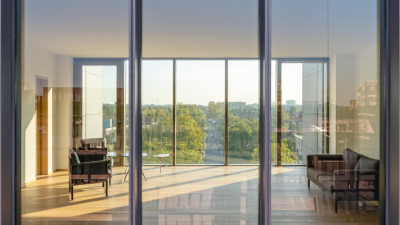
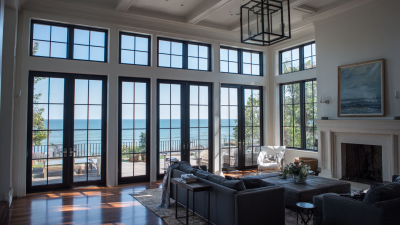
China Best Aluminium Windows & Doors Manufacturers?

Choosing among China’s best aluminium windows & doors manufacturers requires more than comparing catalogue photos or factory prices. The right supplier must prove consistent quality through materials, production controls, testing, and after-sales support. This guide examines manufacturers that work with aluminium windows & doors for homes, commercial buildings, hotels, and renovation projects.

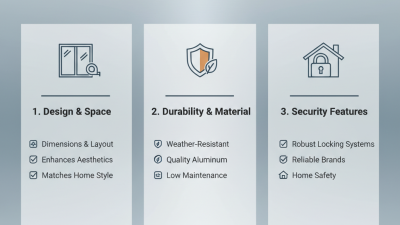
A reliable evaluation starts with the aluminium profile. Check alloy specifications, wall thickness, powder-coating quality, thermal-break design, and drainage details. Small differences matter. A poorly designed corner may allow water entry during heavy rain. Weak hardware can also create alignment problems after repeated opening and closing. Experienced buyers should request sample sections, finish cards, test reports, and project references before signing a contract.

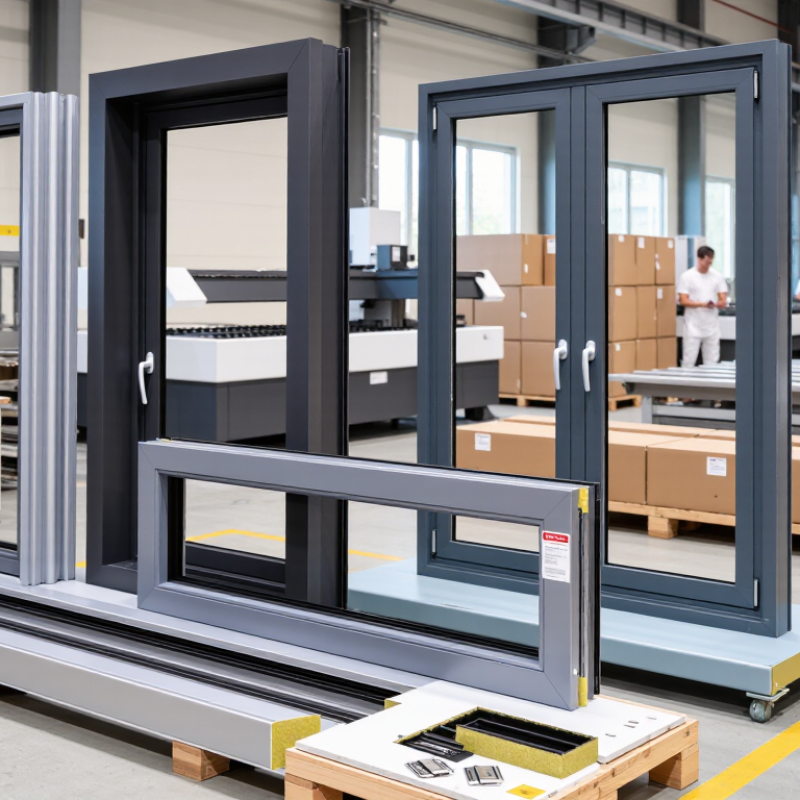
Factory capability matters too. Look for accurate cutting equipment, controlled assembly areas, protective packaging, and documented inspection steps. On-site communication is equally important. Clear shop drawings can prevent costly misunderstandings about glazing, colors, screens, locks, and installation tolerances. Certifications may support credibility, but they should be verified against the actual product and destination market.

There is no universal “best” manufacturer. A company suited to a coastal villa may not fit a high-rise project or a cold climate. Some suppliers offer attractive prices but provide limited technical guidance. Others deliver stronger engineering support at a higher cost. That trade-off deserves honest consideration. This overview compares practical strengths, possible weaknesses, production experience, customization ability, and service reliability, helping buyers create a more defensible shortlist. Perfect suppliers are rare. Careful verification remains essential.
China Best Aluminium Windows & Doors Manufacturers?

What Defines China’s Leading Aluminium Windows and Doors Manufacturers?

China’s leading aluminium windows and doors manufacturers are defined by measured performance, not catalogue size. They control alloy quality, extrusion tolerances, coating thickness, glass specification, and installation details. The International Energy Agency reports that buildings consume about 30% of global final energy. Therefore, thermal breaks, airtight seals, and low-emissivity glass deserve close attention. A reliable manufacturer should provide tested U-values, air-tightness results, water resistance data, and wind-load calculations. These documents matter more than attractive samples.

Experience appears in small details. Factory teams should understand coastal corrosion, high-rise pressure, drainage paths, and uneven wall openings. Quality systems should trace each batch from billet to finished frame. ISO 9001 certification can support process control, but it cannot replace independent testing. The International Aluminium Institute notes that recycled aluminium requires roughly 5% of the energy used for primary aluminium. Responsible manufacturers should explain recycled content and its effect on strength, finish, and warranty terms. No factory is perfect. Vague claims still deserve questions.

Tips: Request a recent third-party test report. Check whether its product configuration matches your project. Ask for coating thickness records, corner-joint samples, and installation guidance. Confirm replacement parts and response times in writing. A 2024 industry review may show market trends, but it cannot prove one supplier’s performance. Visit a production line when possible. Watch how workers protect glass edges, seal corners, and inspect drainage holes. These ordinary actions often reveal more than polished presentations.
How to Evaluate Product Quality, Design, and Manufacturing Standards

Choosing among China’s aluminium window and door manufacturers requires more than comparing catalog photos. Product quality begins with controlled alloy, accurate extrusion, and disciplined assembly. On a factory visit, inspect corner joints, drainage paths, gaskets, and coating consistency. A 1 mm gap can become a visible air leak. Ask for batch records and test certificates, not promises. The U.S. Department of Energy reports that windows can cause 25–30% of residential heating and cooling energy use. That makes thermal evidence commercially important, not decorative.

Request whole-window U-factor and solar heat gain coefficient (SHGC) values. These metrics are more useful than “premium profile” language. The National Fenestration Rating Council explains that lower U-factor generally means better insulation. SHGC should match the climate and window orientation. Check whether figures cover the complete window, including glass, frame, and spacers. ISO 10077-1 provides thermal transmittance calculation methods. Calculated performance is not the same as tested performance. Check the complete unit.

Manufacturing standards should include documented air, water, and wind testing. The AAMA/WDMA/CSA 101/I.S.2/A440 standard evaluates fenestration performance classes and operating requirements. Ask for recent laboratory reports with model numbers matching your quotation. Look closely at powder-coat thickness, hardware alignment, and repeated opening cycles. Small flaws matter. I would inspect one packed unit before approving a large order. This step feels slow, yet it can expose scratched frames, weak protection, or inconsistent labeling. No supplier is perfect, and a vague report should trigger questions, not immediate rejection.

Which Aluminium Window and Door Systems Do Chinese Manufacturers Offer?

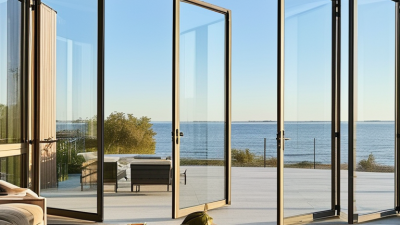
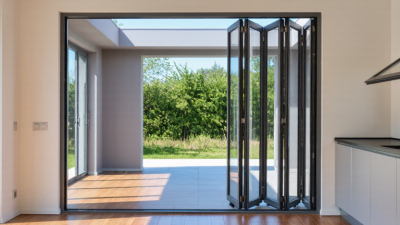
Chinese aluminium manufacturers offer window and door systems for apartments, villas, offices, and large commercial projects. Their common options include casement, sliding, tilt-and-turn, lift-and-slide, and folding systems. Each design serves a different purpose. Casement windows usually provide strong ventilation and tighter sealing. Sliding doors save interior space. Lift-and-slide doors can create wide openings toward gardens or balconies.

Many factories also produce thermally broken aluminium systems. These use a polyamide strip between the interior and exterior profiles. The separation reduces heat transfer. Double glazing is widely available, while triple glazing suits colder climates and demanding energy targets. Manufacturers can also supply curtain wall units, sunrooms, skylights, and custom-shaped windows. Powder coating and anodizing provide practical finishes for humid or coastal environments. Hardware quality still matters. A smooth handle means little if the rollers, seals, or drainage channels are poorly designed.

Reliable suppliers should provide profile drawings, glass specifications, performance reports, and installation guidance. Ask for air-tightness, water resistance, wind-load, and thermal data. Site measurements must be checked carefully before production. Small errors can cause serious fitting problems. One limitation deserves attention: some suppliers advertise impressive insulation values without explaining the complete tested assembly. The frame, glass, spacer, hardware, and installation method all affect real performance. Experienced manufacturers usually recommend samples or mock-up testing for complex projects. That step costs time, but it can reveal weak seals, noisy rollers, or drainage issues before shipment.

How to Compare Certifications, Customization, Pricing, and Lead Times

China Best Aluminium Windows & Doors Manufacturers?

Comparing Chinese aluminium window and door manufacturers requires more than reading a certification list. Ask for current certificates, test reports, and the issuing laboratory’s details. Check whether the documents cover the exact profile, glass, hardware, and production site. A certificate for one product may not apply to another. That detail is often missed.

Customization should be measured through drawings, not promises. Request section profiles, hardware schedules, glass specifications, finish samples, and wind-load calculations. Confirm tolerances for size, color, drainage, and corner joints. A reliable manufacturer should explain what can change without affecting performance. Small details matter. Some suppliers accept unusual designs but lack suitable tooling, causing delays and inconsistent finishes. Review a physical sample before approving mass production.

Pricing must include more than the unit quotation. Compare packaging, tooling, testing, inland delivery, export documents, and replacement policies. Ask whether the price uses identical glass thickness, thermal breaks, and hardware grades. Cheap figures can become expensive after revisions. Lead times should be separated into design approval, sample production, manufacturing, and shipping. Request a written schedule with inspection points. Also confirm the factory’s monthly capacity during peak seasons. I would not trust an attractive deadline without production evidence. Even careful comparisons can fail when site measurements change late, so keep a realistic buffer and record every approved revision.

China Best Aluminium Windows & Doors Manufacturers? - How to Compare Certifications, Customization, Pricing, and Lead Times
Manufacturer Profile Typical Product Focus Relevant Certifications and Standards to Verify Customization Capability Typical Export Price* Estimated Lead Time* Typical MOQ Key Evaluation Points
Profile A
Thermal-Break Specialist
Thermally broken aluminium windows, sliding doors, casement windows, and lift-and-slide systems. ISO 9001 CE where applicable EN 14351-1 test evidence Factory test reports should identify the exact system and configuration. High customization for frame depths, glazing thickness, hardware options, opening styles, colors, and concealed drainage. USD 180–420/m²
Usually excludes installation, local taxes, and special glass.
35–55 days
After drawing approval and deposit.
Commonly 50–100 m² per color or system configuration. Strong option for energy-efficient projects. Check U-value calculations, air tightness, water tightness, and wind-load results.
Profile B
Commercial Project Supplier
Curtain walling, storefront systems, commercial entrance doors, and standard project windows. ISO 9001 Project-specific test reports Local code documentation Verify structural calculations and fire-performance requirements where relevant. Medium to high customization for shop drawings, mullion spacing, panel sizes, glazing types, and finish schedules. USD 150–360/m²
Curtain wall pricing varies significantly with glass, thermal breaks, and accessories.
45–70 days
Large projects may require phased delivery.
Usually one container or one approved project batch. Suitable for larger developments. Compare engineering support, packaging, site tolerances, and replacement-part procedures.
Profile C
Mid-Market Custom Fabricator
Residential sliding windows, folding doors, casement systems, balcony doors, and screens. ISO 9001 or equivalent QMS Material mill certificates Glazing test documentation Confirm whether certificates apply to the finished product or only raw materials. Good customization for standard profiles, powder coating, anodizing, glass combinations, handles, locks, and dimensions. USD 120–280/m²
Final pricing depends on profile series, hardware, glass, and quantity.
25–45 days
Standard colors and profiles are normally faster.
Often 20–50 m² for standard systems; custom colors may require a larger batch. Balanced price and flexibility. Request corner samples, coating thickness records, and a complete bill of materials.
Profile D
High-Volume Standard-Line Factory
Standard sliding windows, sliding doors, fixed panels, and common residential configurations. ISO 9001 Routine QC records Applicable regional compliance files Check batch traceability, dimensional inspection, and glass safety documentation. Moderate customization; best performance is usually achieved with existing profile series and standard accessories. USD 95–210/m²
Generally competitive for repeat orders and standard specifications.
20–35 days
Subject to profile and glass availability.
Commonly 10–30 m² for standard products; custom finishes may increase MOQ. Efficient for cost-sensitive repeat orders. Compare section thickness, hardware durability, packing method, and allowable tolerances.
Profile E
Premium Architectural Systems Supplier
Slim-frame windows, panoramic sliding doors, minimal-frame systems, pivot doors, and premium hardware packages. ISO 9001 Independent performance testing Project engineering records Request system-level reports for the selected glass, hardware, gaskets, and frame combination. Very high customization for large panels, narrow sightlines, special glass, motorized hardware, drainage, and architectural finishes. USD 300–750+/m²
Large glass, automation, unusual hardware, and engineering fees can increase the total.
50–85 days
Prototype approval and special components may extend production.
Usually project-based; prototypes may be accepted before mass production. Best for premium residential and hospitality work. Assess deflection limits, hardware load ratings, glass handling, and after-sales support.
Profile F
Integrated Window-and-Door Exporter
Windows, doors, insect screens, shutters, railings, and coordinated exterior packages. ISO 9001 CE documentation where applicable Packaging and inspection records Verify certificates against the destination market and the final product specification. High package-level customization, including coordinated colors, screens, shutters, hardware, and installation accessories. USD 130–340/m²
Package pricing can reduce coordination costs but should be separated by product category.
30–60 days
Multiple product categories may require consolidated production scheduling.
Commonly one mixed container or a defined project quantity. Convenient for complete building-envelope packages. Compare product consistency, packing labels, spare parts, and installation instructions.
*Indicative export ranges for aluminium windows and doors supplied from China. Actual prices and lead times vary according to aluminium alloy and profile thickness, thermal-break design, glass specification, hardware, surface finish, order quantity, packaging, testing requirements, destination, and Incoterms. Certifications should be verified using current documents that match the exact product system and destination-market requirements.

What Should Buyers Check Before Choosing a Chinese Manufacturer?

Choosing among China’s aluminium window and door manufacturers requires more than comparing prices. Buyers should verify factory experience, product quality, and communication standards. Ask how long the manufacturer has served overseas projects. Request recent project photos, production videos, and customer references. A serious supplier should explain alloy grades, profile thickness, glass specifications, hardware sources, and surface treatments clearly.

Check whether the factory controls key production stages, including cutting, welding, powder coating, assembly, and final inspection. Ask for measurable tolerances, air-tightness results, water-resistance tests, and wind-load data. Certifications can support credibility, but they should match your project’s market and building requirements. Do not accept copied documents without verification. Samples matter, too. Inspect corner joints, drainage holes, locking points, gasket fit, and coating consistency. Small defects often become expensive problems after installation.

Tips: Compare written quotations line by line. Confirm profile thickness, glass type, color code, packaging, delivery terms, warranty coverage, and replacement procedures. Request a pre-shipment inspection with photos and recorded test results. Keep every specification in the contract. Clear records protect both sides.

Communication is another practical test. Send technical drawings and ask precise questions. Notice whether replies are detailed or vague. A factory may look impressive online but lack project discipline. I have seen buyers focus on showroom appearance and overlook packaging strength. That mistake can damage finished frames before they reach the site. Check carefully.