What Are the Best Track Doors in 2026?
Choosing the best track doors in 2026 starts with understanding where they will be installed and how often they will be used. A door that works well for a wardrobe may not suit a busy patio opening. The right choice depends on available space, panel weight, opening width, and the surrounding floor and wall conditions. For interiors, slim frames and soft-close hardware can improve everyday use without taking up swing space. For exterior openings, weather seals, suitable glazing, and secure locks deserve closer attention. Small details matter. A track that feels smooth in a showroom can behave differently when dust, uneven flooring, or frequent use enters the picture.
This guide compares track doors by practical features rather than appearance alone. It considers track material, roller design, noise, maintenance, installation requirements, and the availability of replacement parts. Look for clear product specifications and installation guidance, especially when panels are heavy or openings are unusually wide. Check that the stated load rating applies to the complete system, not just one component. Do not assume that a premium finish guarantees better performance. Product ranges and local availability can change, so confirm current specifications with the manufacturer or a qualified installer before buying. There is no perfect setup. A careful comparison can still narrow the options and help you choose doors that fit your space, routine, and budget.
Understanding Track Doors and Their Main Uses
A track door moves along a rail instead of swinging into the room. That simple difference matters in narrow corridors, busy loading areas, and homes where furniture sits close to an opening. Top-hung systems keep the floor clear, while bottom-rolling designs carry weight on floor-mounted rollers. Bypass doors let panels overlap, making them useful for closets; pocket doors slide into a wall cavity. Each type solves a different space problem. None is automatically the best.
The U.S. Energy Information Administration’s 2018 Commercial Buildings Energy Consumption Survey reported 6,826 trillion Btu of energy use in U.S. commercial buildings.
That figure covers whole buildings, not track doors, but it shows why operational details deserve attention. For warehouses and shops, check opening width, door weight, cycle frequency, and resistance to dust or moisture. For homes, consider noise, privacy, and whether a bottom rail creates a trip hazard. A smooth sample glide in a showroom can feel reassuring, but it does not predict years of daily use. I would also inspect track access: a difficult-to-clean rail can become irritating fast. Reliable selection starts with the opening and its real traffic, not appearance alone.
How Track Door Quality Is Evaluated in 2026
How should buyers judge the best track doors in 2026? Look beyond frame appearance and compare documented performance. The U.S. Department of Energy’s Energy Saver guidance estimates that windows, doors, and skylights account for 25–30% of home heating and cooling energy use. That figure covers several product types, not track doors alone, but it shows why air leakage and glazing matter. Ask for test results, not just efficiency claims.
Check whether the door has been evaluated for air leakage, water penetration, and structural pressure using relevant ASTM methods, such as E283, E547, and E330. Also assess the track, rollers, seals, and locking points. A door should glide without jolting, and its rollers should remain accessible for adjustment. Ratings are useful, but installation quality can change real-world performance. I would not treat one laboratory number as proof of long-term durability.
Tip: Slide the panel across its full travel several times. Listen for scraping, inspect the bottom track for grit, and check that the meeting edges close evenly. A showroom glide can be misleading. Ask how the track drains and how often its rollers need inspection; those details are easy to overlook.
What Are the Best Track Doors in 2026? — How Track Door Quality Is Evaluated
U.S. accessibility benchmarks for evaluating interior sliding track doors. The figures use different units, so bar lengths are not directly comparable.
The U.S. 2010 ADA Standards specify a 32-inch minimum clear opening, a 5-pound maximum opening force for sliding doors, and a ½-inch maximum threshold height. These are accessibility benchmarks, not a ranking of products; confirm applicable local requirements and compare product-specific durability, weather, and hardware test data.
Common Track Door Types, Materials, and Designs
What Are the Best Track Doors in 2026?
Common Track Door Types, Materials, and Designs
Track doors vary in how they move and how much privacy they provide. A bypass door uses overlapping panels, making it practical for closets with limited floor space. Pocket doors slide into a wall cavity and keep the opening clear, but installation requires suitable wall construction. Barn-style doors run along an exposed track and create a strong visual feature. They do not seal gaps as closely as hinged doors. Measure twice.
Material affects weight, upkeep, and the feel of a room. Solid wood offers warmth and can be refinished, though humidity may cause movement. Aluminum frames are lightweight and work well with glass panels. Glass brings daylight into hallways, but fingerprints can make it less effortless than showroom photos suggest. Track hardware matters just as much: check its rated load, wall support, floor guide, and soft-close compatibility. Small details matter. A narrow floor guide can reduce swinging, while a poorly supported track may rattle or bind. There is no universal winner; the best design balances clearance, privacy, maintenance, and the wall structure available.
Choosing a Track Door for Different Spaces and Needs
What Are the Best Track Doors in 2026?
Choosing a Track Door for Different Spaces and Needs
The best track door depends on what the room needs: privacy, clear floor space, light, or easy access. For a narrow bedroom or ensuite, a top-hung sliding door avoids a floor track that can catch dust and toes. It does not seal as tightly as a hinged door, though. For a pantry, a bypass pair can work well when there is no room for a door to swing outward. Measure handles and nearby cabinets too; a few centimetres can decide whether they collide. Small detail. Big annoyance.
For patios and exterior openings, compare frame quality, glazing, drainage, and the door’s rated thermal performance—not just the panel style.
The U.S. Energy Information Administration’s 2020 Residential Energy Consumption Survey reports that space heating and cooling together use roughly half of household energy.
That makes a well-sealed exterior track door worth careful consideration, especially in a drafty room. Check the product’s tested performance data, then inspect the sill and weather seals in person if possible. A smooth glide feels reassuring, but it cannot prove a tight seal. I would also leave room in the decision for maintenance: exposed tracks collect grit, and even a well-chosen door needs occasional cleaning.
Installation, Safety, and Maintenance Considerations
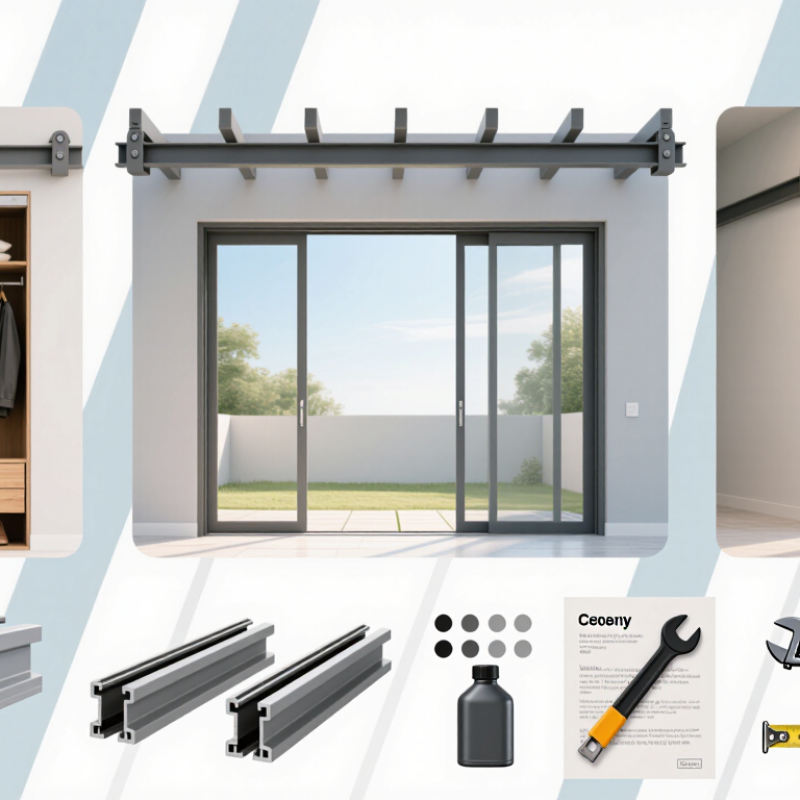
Choosing a track door is only part of the decision; installation determines whether it moves smoothly and stays secure. Measure the opening at several points, since older walls are rarely perfectly square. The track must be level and fastened into suitable structural support, not just thin drywall. Confirm that the hardware is rated for the door’s weight. A small measurement error can cause rubbing later.
Leave proper clearance above and beside the opening, and fit a floor guide to limit swinging. For glass doors, use safety-rated glazing and check that the frame and track are designed for it. Anti-jump devices help keep a panel seated, but they are not a substitute for correct installation. Keep fingers clear during adjustment. If the wall is uneven or the door feels unusually heavy, a qualified installer can assess the support and alignment.
Maintenance is simple, but easy to postpone. Every few months, clear grit from the track and inspect fasteners, rollers, guides, and stops for looseness or wear. Use only cleaning products and lubricants recommended for the hardware; excess oil can attract dust. Listen for new scraping or rattling. Perfectly silent movement is not always realistic, and I would not ignore a sudden change just because the door still opens.