Choosing track doors for international projects requires more than comparing catalogs or polished product images. Buyers must match the door with climate, building use, opening frequency, security needs, and installation conditions. A coastal warehouse needs corrosion-resistant hardware and reliable drainage. A hotel lobby may prioritize quiet movement, thermal insulation, and accessible operation. These details often decide long-term value.
The United Nations Environment Programme’s 2023 Global Status Report for Buildings and Construction states that buildings consume about 30% of global final energy and produce around 26% of energy-related emissions. Therefore, track doors can influence more than appearance. Their seals, glazing, frame materials, and closing accuracy may affect drafts and indoor comfort. Buyers should request tested U-values, air-leakage results, water-resistance ratings, wind-load data, and cycle-test evidence. Do not accept vague claims.
A perfect door does not exist.
The best choice balances performance, maintenance, availability, and total ownership cost. ISO 9001 certification can indicate controlled production, but it does not replace product testing. Factory experience also matters. Ask for installation drawings, spare-parts policies, warranty terms, and references from similar climates. The International Energy Agency’s Energy Efficiency 2024 report highlights the continuing importance of efficiency improvements across buildings, reinforcing the need to evaluate door performance within the whole envelope.
Some buyers focus too heavily on the lowest quotation. That approach can overlook difficult delivery routes, unsuitable rollers, or expensive site adjustments. A more reliable comparison examines verified specifications, local service capability, and realistic operating conditions. This guide explains how global buyers can assess track doors with greater confidence, while recognizing that regional standards and project priorities still require professional review.
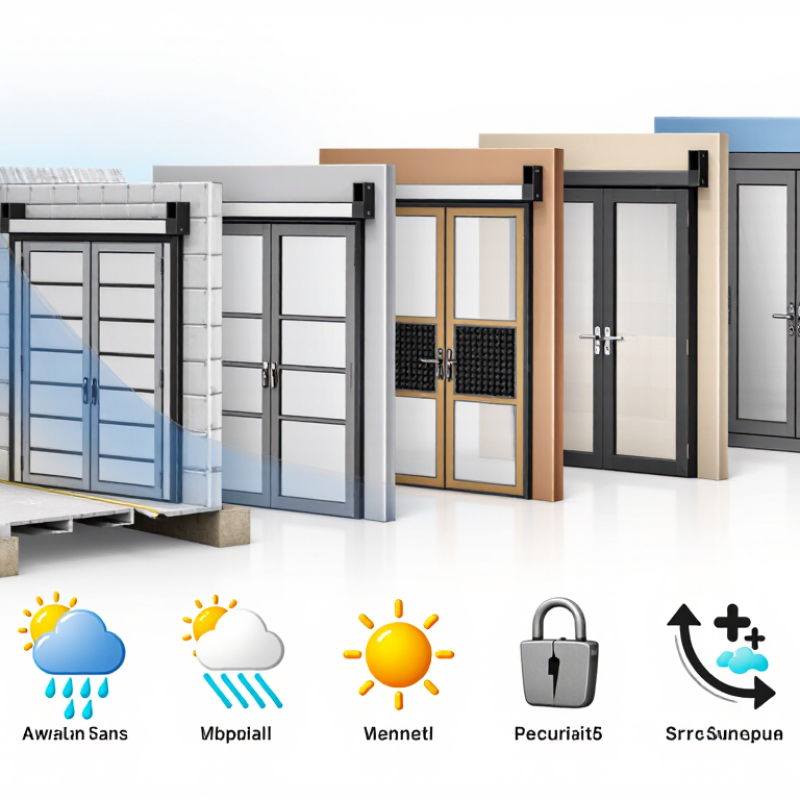
Top track doors are door systems supported by an overhead track rather than traditional floor hinges. Rollers or hangers sit inside the track and carry the door panels. A bottom guide keeps each panel moving steadily and prevents swinging.
When opened, the panels slide, fold, or stack beside the entrance. The exact movement depends on the hardware layout and panel design. Smooth operation requires a strong lintel, accurate track alignment, and enough overhead clearance. The floor mainly guides the door, so it stays more accessible for carts, equipment, and everyday traffic.
Choose the system according to opening width, panel weight, wind exposure, and use frequency. In humid or coastal regions, corrosion-resistant hardware deserves close attention. In colder areas, check the seals and thermal performance around the frame. A professional installer should measure the structural opening, not only the visible doorway. Small errors can cause noise, sticking, or uneven gaps.
Do not ignore maintenance. Keep the track clean and inspect rollers, fasteners, and guides regularly. It is not maintenance-free. Buyers should also confirm spare-part availability, installation instructions, and tested load ratings before ordering internationally. Some designs look elegant but sacrifice insulation or ease of repair. That trade-off is easy to miss. A careful comparison of drawings, samples, and site conditions usually prevents expensive adjustments later.
| Door Type | How the Top Track Works | Typical Applications | Main Advantages | Key Limitations | Selection Considerations |
|---|---|---|---|---|---|
| Single Sliding Top Track Door | One door panel is suspended from rollers inside an overhead track and moves horizontally along the wall. | Bedrooms, offices, retail areas, kitchens, and compact interior spaces. | Space-saving operation, simple layout, and relatively straightforward installation. | Requires clear wall space beside the opening; the track and rollers must carry the full panel load. | Check wall length, panel weight, track capacity, opening width, and whether a floor guide is needed. |
| Double Sliding Top Track Door | Two panels slide away from the center or toward one side using synchronized or independent overhead rollers. | Wide room entrances, meeting rooms, hospitality spaces, and large residential openings. | Provides a wider clear opening while avoiding the swing radius of hinged doors. | Needs additional wall or stacking space and may require more accurate alignment. | Confirm the total opening width, panel stacking direction, roller adjustment, and anti-jump protection. |
| Top-Hung Barn-Style Door | A visible overhead rail supports the door through hanger rollers; the panel slides outside the wall surface. | Residential interiors, restaurants, studios, offices, and decorative partitions. | Distinctive appearance, easy visual access to hardware, and no recessed pocket required. | Usually provides less sound and light control than a hinged or pocket door because the panel sits outside the opening. | Inspect wall strength, header fixing points, door-to-wall clearance, soft-close options, and privacy requirements. |
| Telescopic Top Track Door | Two or more panels slide in the same direction and overlap to reduce the required side-stacking length. | Hotels, clinics, conference rooms, commercial interiors, and limited-wall-space openings. | Creates a large opening where a conventional single sliding panel would need more wall space. | More components, higher alignment sensitivity, and greater maintenance needs than a single-panel system. | Evaluate panel sequence, total system weight, track length, synchronization, and service access. |
| Pocket Sliding Door | The top track guides the panel into a cavity inside the wall when open; the wall must be designed to accommodate the pocket. | New construction, bathrooms, offices, bedrooms, and areas requiring a fully concealed open position. | Leaves both sides of the wall unobstructed and delivers a clean, integrated appearance. | Retrofitting can be difficult; plumbing, wiring, and structural elements may restrict the pocket location. | Confirm wall thickness, cavity dimensions, structural framing, access for repairs, and door-panel compatibility. |
| Folding Top Track Door | Several connected panels fold and slide along an overhead track, gathering at one or both sides of the opening. | Event venues, restaurants, adaptable offices, retail spaces, and wide room dividers. | Can open a broad passage while using less side-stacking space than multiple separate sliding panels. | More hinges, carriers, and moving joints can increase adjustment and maintenance requirements. | Check folding direction, panel count, carrier load, floor guidance, traffic frequency, and cleaning access. |
| Framed Glass Top Track Door | A glass panel, usually held in a frame, is carried by overhead rollers and guided at the floor or lower edge. | Offices, showrooms, hospitality areas, meeting rooms, and interior partitions. | Allows daylight and visual connection while reducing the need for a conventional swing door. | Glass requires correct safety specifications, careful handling, and suitable protection from impact. | Specify safety glazing, glass thickness, frame material, acoustic expectations, privacy treatment, and edge protection. |
| Heavy-Duty Top Track Door | Reinforced overhead rails, carriers, and fixing points support larger or heavier panels for frequent use. | Warehouses, industrial facilities, large commercial rooms, and high-traffic building entrances. | Greater load capacity, durability, and suitability for demanding operating cycles. | Requires stronger structural support and may need professional installation and periodic adjustment. | Verify panel mass, operating cycles, header strength, corrosion conditions, safety stops, and replacement-part availability. |