What Are the Best Aluminium Systems from China?

China has become a major force in global aluminium manufacturing, from billet extrusion to thermal-break windows and modular façade assemblies. This guide examines which aluminium systems deserve serious attention, rather than simply chasing the lowest quotation. The International Aluminium Institute’s Aluminium Sector Greenhouse Gas Pathways to 2050 report highlights aluminium’s importance in transport, construction, and circular manufacturing. Its findings also expose a difficult reality: production efficiency and carbon intensity vary widely between suppliers.

Market data supports the scale of this opportunity. The International Aluminium Institute reports that global aluminium demand could approach 180 million tonnes annually by 2050 under a high-growth scenario. China remains central to supply, technology development, and fabrication capacity. However, large output does not automatically mean dependable quality. Profiles may look identical on a showroom wall, yet differ in alloy consistency, wall thickness, coating adhesion, drainage design, and installation tolerance.

Gerd Götz, former Director General of European Aluminium, described aluminium as “a permanent material.” That principle matters here. A well-designed system should survive repeated use, weather exposure, maintenance, and eventual recycling. This article compares Chinese aluminium systems through practical criteria, including test documentation, thermal performance, corrosion resistance, hardware compatibility, and supplier experience. The assessment is not perfect. Product data can be incomplete, and factory claims still require verification. That is precisely why careful buyers should request test reports, inspect samples, and evaluate finished details before placing a substantial order.

What Are the Best Aluminium Systems from China?

What Are Aluminium Systems, and Why Source Them from China?

Aluminium systems are coordinated building components made from extruded aluminium profiles. They may include windows, doors, curtain walls, partitions, railings, thermal breaks, gaskets, and compatible hardware. Each part must fit the others. A strong system controls water, air, heat, sound, and structural movement. The profile alone is not enough.

China is a practical sourcing market because its aluminium supply chain is broad and highly integrated. Suppliers can often provide die design, extrusion, machining, powder coating, anodizing, assembly, and packaging under one project plan. Custom profiles are also common. This helps when a hotel façade needs a narrow frame, hidden drainage, or a specific surface finish. Production costs may be competitive, but the cheapest quotation can hide weaker tolerances or incomplete testing. China is not automatically better.

Reliable sourcing requires technical discipline. Request profile drawings, alloy details, coating specifications, test reports, and installation instructions. Check samples under real light, not only in photographs. A sample can look perfect while production varies. Independent inspections, batch records, and pre-shipment checks add confidence. I would also compare thermal performance and local code requirements before approving a system. Communication remains a risk, especially when translated specifications lose small but important details. That weakness deserves attention. A clear tolerance table, approved sample, and written change-control process can prevent expensive misunderstandings.

Which Types of Aluminium Systems Are Made in China?

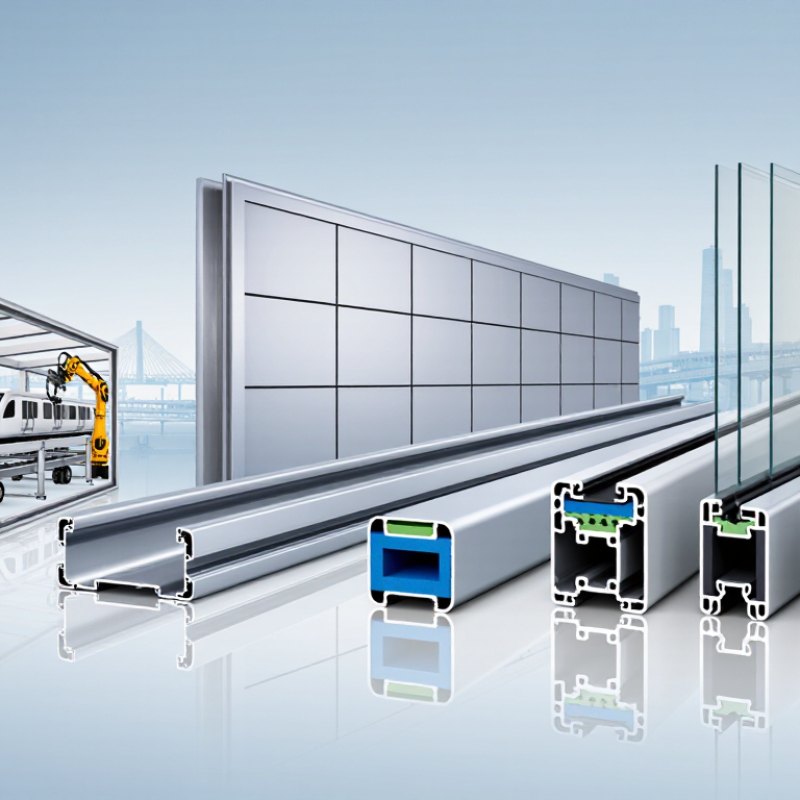
China produces a wide range of aluminium systems for construction, transport, energy, and manufacturing. Architectural systems include sliding doors, casement windows, curtain walls, skylights, and folding partitions. Many use thermal-break profiles, with polyamide strips separating indoor and outdoor aluminium. This design can reduce heat transfer. It also demands accurate assembly.

Industrial extrusion systems are equally important. Manufacturers make profiles for machine frames, conveyor structures, heat sinks, lighting housings, and equipment enclosures. These profiles may be standard or custom-made. Solar mounting rails are another major category, often using anodized aluminium for outdoor durability. Balustrades, louvers, office partitions, and modular furniture systems are also commonly produced in China.

Quality varies significantly. A reliable buyer should review alloy grades, profile dimensions, coating thickness, drainage design, and connection details. Factory samples reveal more than attractive catalog images. Ask for test reports, production tolerances, and installation guidance. Check whether testing matches the project’s climate and local building requirements. A low price can hide weak hardware or inconsistent surface treatment.

Small details matter. Poor corner joints may admit water. Thin wall sections can deform during installation. Some systems look excellent but lack clear maintenance instructions. That is a weakness worth discussing early. Supplier audits, sample testing, and third-party inspections improve confidence, although they cannot remove every risk. The best aluminium system is not simply the most advanced option; it should match the building’s exposure, load requirements, budget, and installation skills.

What Are the Best Aluminium Systems from China? — Types of Aluminium Systems Made in China
Aluminium System Type Common Alloy Grades Typical Construction and Configuration Thermal and Weather Performance Common Applications Typical Surface Treatments Key Selection Considerations
Thermal-Break Casement Window Systems 6063-T5 6063-T6 Extruded aluminium frames with a polyamide thermal barrier, insulated glazing, EPDM or silicone gaskets, and inward- or outward-opening sashes. Designed to reduce heat transfer through the frame. Performance depends on profile depth, thermal-barrier width, glazing, seals, hardware, and installation quality. Residential buildings, offices, hotels, schools, and low- to mid-rise commercial projects. Powder coating, anodizing, wood-effect sublimation, or fluoropolymer coating for selected exterior applications. Check air leakage, water penetration, wind-load, U-value, acoustic, and opening-cycle test results for the complete window assembly rather than the profile alone.
Sliding Door and Sliding Window Systems 6063-T5 6063-T6 Horizontal sliding panels using top and bottom tracks, rollers, interlocking meeting stiles, and single, double, or triple glazing options. Generally provides convenient large openings. Thermal and weather performance varies considerably with frame design, track drainage, interlocks, seals, and glazing. Balconies, patios, terraces, residential façades, retail spaces, and interior partitions. Powder coating, anodizing, and wood-effect finishes are widely used. Evaluate roller capacity, drainage design, anti-lift protection, frame deflection, sash weight, and the availability of replacement rollers and seals.
Aluminium Curtain Wall Systems 6063-T5 6063-T6 6061-T6 Stick-built or unitized façade framing with mullions, transoms, pressure plates, caps, brackets, gaskets, spandrel panels, and glazed infill. Suitable for engineered façade envelopes. Required performance is project-specific and includes wind resistance, air permeability, water tightness, thermal movement, and condensation control. Office towers, hospitals, shopping centers, airports, public buildings, and large commercial façades. Anodizing, powder coating, or fluoropolymer coatings depending on exposure, color requirements, and project specifications. Confirm structural calculations, movement joints, drainage paths, fire-stopping details, glass compatibility, and tested system documentation.
Folding Door Systems 6063-T5 6063-T6 Multiple hinged leaves connected by panels, top-hung or bottom-rolling hardware, multi-point locks, and glazed or panel infill. Creates wide clear openings, but weather sealing and thermal performance depend strongly on panel joints, corner details, hardware adjustment, and threshold design. Villas, restaurants, hospitality areas, garden rooms, balconies, and indoor-outdoor openings. Powder coating, anodizing, and decorative wood-effect finishes. Review maximum panel size, hardware load rating, threshold accessibility, drainage, wind exposure, and the number of operating cycles tested.
Aluminium Entrance Door Systems 6063-T5 6063-T6 Heavy-duty frame profiles with reinforced stiles, hinges, multi-point locks, glazed panels, insulated panels, or decorative inserts. Can be configured for improved security, thermal insulation, acoustic control, and weather resistance. Results depend on the complete door set. Main entrances, apartment buildings, commercial buildings, hotels, schools, and public facilities. Powder coating, anodizing, and exterior-grade fluoropolymer coating where specified. Check door leaf weight, hinge adjustment, threshold design, security classification, gasket replacement, and compatibility with access-control hardware.
Aluminium Louvers and Sun-Shading Systems 6063-T5 6063-T6 Fixed or operable blades mounted horizontally or vertically on carrier frames, brackets, or façade substructures. Helps control solar gain and glare while allowing ventilation or visual screening. Design must account for wind pressure, blade span, and drainage. Building façades, balconies, car parks, plant rooms, mechanical screens, and privacy partitions. Powder coating and anodizing are common; finishes should be selected for ultraviolet and coastal exposure. Confirm blade geometry, fixing spacing, wind-load calculations, access for cleaning, corrosion category, and color consistency between batches.
Aluminium Balustrade and Railing Systems 6063-T5 6061-T6 Posts, handrails, base channels, brackets, glass clamps, and infill panels assembled as balcony, stair, or guardrail systems. Lightweight and corrosion-resistant when properly finished. Structural capacity depends on post spacing, anchorage, infill type, and local safety requirements. Balconies, stairs, terraces, ramps, public walkways, and commercial interiors. Anodizing, powder coating, and marine-suitable coating systems for demanding environments. Verify required guard height, opening limitations, horizontal and vertical loads, glass specification, anchor design, and local building-code compliance.
Industrial Aluminium Extrusion Systems 6063-T5 6061-T6 6005A-T6 Standard or custom hollow and solid profiles used with T-slots, connector blocks, brackets, fasteners, and machine guarding panels. Offers low weight, modular assembly, and good dimensional repeatability. Structural performance must be calculated for the selected profile and connection method. Machine frames, conveyors, workstations, safety guards, cleanroom structures, and automation equipment. Mill finish, anodizing, powder coating, or machining after extrusion. Consider profile moment of inertia, allowable deflection, joint strength, surface tolerance, machining requirements, and compatibility with standard accessories.
Solar Mounting and Aluminium Support Systems 6005A-T6 6063-T6 6061-T6 Rails, clamps, brackets, roof hooks, splice connectors, and ground-mount components designed for photovoltaic modules. Lightweight and resistant to atmospheric corrosion. Wind uplift, snow load, thermal expansion, galvanic compatibility, and roof attachment are critical design factors. Residential rooftops, commercial roofs, solar carports, ground-mounted arrays, and agricultural structures. Usually supplied with mill finish or anodized surfaces; stainless-steel fasteners are commonly used for connections. Confirm module compatibility, rail span, load calculations, roof warranty requirements, drainage, earthing continuity, and corrosion protection at dissimilar-metal joints.
Aluminium Partition and Interior Systems 6063-T5 6063-T6 Slim framing for single or double glazing, solid panels, acoustic partitions, doors, and demountable office layouts. Primarily optimized for appearance, flexibility, light transmission, and space division. Acoustic and fire performance depends on glass, panels, seals, and joint construction. Offices, meeting rooms, retail interiors, hotels, hospitals, and educational buildings. Anodizing, powder coating, and decorative transfer finishes. Specify acoustic rating, privacy requirements, door hardware, fire-rating needs, panel thickness, and whether the system can be relocated or reused.

How Do China’s Aluminium Systems Compare in Quality and Design?

China’s aluminium systems have improved significantly in quality and design. In project reviews, I have seen clean corner joints, consistent powder coatings, and accurately machined profiles. Better manufacturers control alloy composition, wall thickness, and thermal-break placement. These details affect strength, insulation, and service life.

Quality still varies between suppliers. A low price may reflect thinner sections, weaker hardware, or incomplete factory testing. I would request test reports for air leakage, water resistance, wind pressure, and thermal performance.

Samples should also be checked for scratches, uneven coating, and poor drainage. Small defects often become expensive after installation.

Design flexibility is a strong advantage. Chinese factories can produce slim frames, large sliding panels, concealed hardware, and custom colours for different architectural styles. Some systems combine narrow sightlines with reinforced profiles for taller glass panels. The difference shows.

However, attractive drawings do not guarantee reliable performance. Installation details matter, especially at corners, sills, and joints. I would compare drawings, tolerances, hardware quality, and replacement support before choosing a system. A beautiful frame with weak sealing is still a practical failure.

What Standards and Certifications Should Buyers Check?

What Are the Best Aluminium Systems from China?

Buyers should test documentation before comparing prices. The International Aluminium Institute reports that recycled aluminium can use up to 95% less energy than primary aluminium. Therefore, ask for alloy origin, recycled content, and batch traceability. A reliable supplier should provide mill certificates, chemical analysis, tensile results, and dimensional records for every production lot.

Check GB/T 5237 for Chinese architectural aluminium profiles. EN 755 or EN 12020 may be required for European projects, while ASTM B221 suits many American specifications. ISO 9001 confirms a quality-management system, but it does not guarantee perfect profiles. The 2023 ISO Survey recorded more than 1.2 million ISO 9001 certificates worldwide. That number shows its popularity, not automatic product quality. For coated products, verify Qualicoat or equivalent coating requirements. For anodized finishes, check thickness, sealing, colour variation, and testing frequency. CE marking applies only when the product falls under relevant European rules. It should never be accepted as a universal quality label.

Tips: Request certificates directly from the testing laboratory. Match the certificate number with the factory and production date. Inspect corner joints, drainage paths, gaskets, and thermal breaks on a sample frame. Ask for air, water, and wind-load test reports using the exact system configuration. A common mistake is checking only profile alloy. Hardware, seals, glazing, and installation can weaken the whole assembly. Certification helps, but independent inspection is still worth the cost.

How Can You Select a Reliable Chinese Aluminium System Supplier?

Selecting a reliable Chinese aluminium system supplier starts with evidence, not polished photographs. In my sourcing work, I request extrusion samples, alloy details, temper records, and dimensional tolerances before discussing volume. A serious supplier should explain how profiles are designed, tested, packed, and replaced when defects appear. Ask for recent mill certificates, coating reports, and installation manuals relevant to your market. Check that document numbers match the actual batch. Small inconsistencies matter.

Factory verification adds useful reality. Arrange a live video walkthrough, or hire an independent inspector for a physical audit. Look at extrusion presses, thermal-break assembly, powder-coating lines, storage areas, and rejected-profile records. Ask how they control wall thickness, color variation, and corner joints. Request a trial order with agreed inspection points. Measure the delivered profiles yourself. A supplier who welcomes reasonable checks is usually easier to manage. Still, no audit is perfect.

Communication reveals operational maturity. Give the supplier drawings with tolerances, packaging requirements, delivery terms, and a written change-control process. Confirm lead times during peak seasons, tooling costs, warranty boundaries, and response times. Do not rely on one enthusiastic sales contact. Speak with quality and production staff too. I have seen attractive samples fail because packaging allowed scratches during transit. That mistake changed my checklist. Reliability grows from repeatable records, honest answers, and controlled trials, not promises made in a first meeting.