Choosing China’s top curtain wall window system manufacturers requires more than comparing catalogues or export rankings. A polished brochure proves little. Performance depends on tested air leakage, water resistance, structural movement, thermal insulation, fabrication accuracy, and after-sales support.
The building sector consumed about 32% of global energy and produced approximately 34% of global carbon emissions in 2022, according to the 2023 Global Status Report for Buildings and Construction from UNEP and the GlobalABC. Curtain wall window system design therefore affects both comfort and operational energy. The International Energy Agency also identifies building envelopes as important efficiency opportunities. Small details matter. A poorly sealed corner can become a visible condensation line.
Façade specialist Stephen Selkowitz has described the envelope as “the interface between the interior and exterior environment.” That principle should guide manufacturer evaluation. Reliable suppliers should provide laboratory evidence, project references, thermal calculations, and documented quality controls. Look for testing aligned with standards such as ASTM E283, ASTM E331, AAMA 501.6, or EN 13830, depending on the project location.
This guide examines leading Chinese manufacturers through a practical lens. It considers system engineering, glass and aluminium integration, customization, production capacity, certifications, installation guidance, and lifecycle service. Market data is useful, but it is not enough. Factory scale can hide weak site coordination. Certifications can also become outdated.
The strongest choice is rarely the cheapest quotation. It is the supplier that can prove consistent performance under wind, rain, heat, movement, and time. That assessment remains imperfect, but it is more dependable than rankings alone.

China Top Curtain Wall Window System Manufacturers?
A leading Chinese curtain wall and window system manufacturer offers more than attractive profiles. It understands wind pressure, thermal movement, water drainage, and local building conditions. Experienced engineers should review drawings before production, not after problems appear. Reliable manufacturers use controlled extrusion, accurate machining, and documented inspection procedures. They can explain alloy grades, coating performance, glass specifications, and sealant compatibility in clear language. Vague promises are warning signs.
Project experience also matters. A manufacturer familiar with high-rise buildings should provide tested system data, installation details, and evidence from completed projects. Quality should remain stable between samples and bulk orders. Factory audits can reveal useful details, including storage conditions, equipment maintenance, and worker training. Certifications help, but they do not replace technical judgment. No supplier is perfect. Even strong teams may miss a detail when drawings change late. That weakness deserves honest review, not polished marketing.
Tips: Ask for performance reports, drainage sections, and tolerance standards. Confirm who controls design changes. Request sample testing before mass production. Check how defects are recorded and corrected. A dependable partner answers difficult questions directly. It also admits limits. That is often more valuable than a flawless presentation.

A leading manufacturer is evaluated by a balanced combination of engineering capability, verified performance, production consistency, project delivery, and long-term technical support. The weighting below is an industry-oriented evaluation model rather than company-specific data.
The percentages represent the relative importance of each evaluation dimension when comparing curtain wall and window system manufacturers.
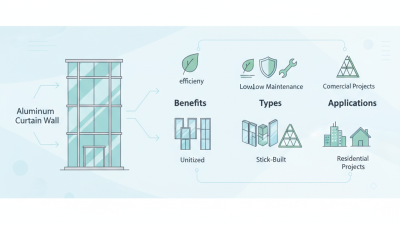
China’s curtain wall market offers several system types for different building scales and climates. The stick system uses factory-fabricated mullions and site-assembled glass panels. It suits smaller projects and allows flexible adjustment during installation. However, site labor can increase quality risks and construction time.
Unitized curtain walls arrive as completed panels, including frames, glass, gaskets, and insulation. They support faster installation on high-rise buildings and improve factory-controlled accuracy.
Semi-unitized systems balance prefabrication with limited site assembly. Point-supported glazing creates a lighter visual effect, but it demands careful structural and wind-load calculations.
Window wall systems sit between floor slabs and often support residential ventilation needs.
Window options include thermally broken aluminum, uPVC, timber-aluminum, and fire-rated assemblies. Thermally broken frames reduce conductive heat transfer through polyamide insulation strips.
Low-emissivity glass and argon-filled cavities can further improve energy performance. According to Grand View Research, the global curtain wall market was valued at over US$40 billion in recent estimates. China’s National Bureau of Statistics reported construction industry output above RMB30 trillion in 2023.
These figures show strong demand, but market size does not guarantee system quality. Designers should verify U-values, air tightness, water resistance, acoustic performance, and fire behavior.
GB/T 21086 testing remains relevant for curtain wall evaluation in China. Project experience suggests that drainage details often deserve more attention than appearance. A beautiful façade can still fail around poorly sealed corners.
China Top Curtain Wall Window System Manufacturers?
Major Capabilities of China’s Top System Manufacturers
China’s leading curtain wall window system manufacturers combine design engineering, controlled fabrication, and project-level testing. According to Grand View Research, the global curtain wall market was valued at approximately USD 47 billion in 2023. This demand rewards suppliers that can deliver more than attractive glass elevations. Strong manufacturers develop thermal, structural, acoustic, and weatherproofing solutions together.
Their engineering teams commonly use BIM coordination, finite-element analysis, and digital production models. These tools help resolve slab edges, fire barriers, drainage paths, and opening tolerances before fabrication. Testing is equally important. Air infiltration, water penetration, wind resistance, and thermal performance should be verified through recognized laboratory procedures. The International Energy Agency reports that buildings consume about 30% of global final energy. Therefore, low-emissivity glass, insulated frames, warm-edge spacers, and effective thermal breaks deserve close attention.
Factory capability matters on site. Automated cutting, CNC machining, and barcode-based tracking can reduce dimensional mistakes. Experienced manufacturers also provide mock-up testing, installation guidance, inspection records, and replacement-part support. Some factories handle unusual spans or irregular angles well. Others struggle when drawings change late. That weakness is easy to miss.
A reliable evaluation should examine documented test results, material traceability, coating thickness, sealant compatibility, and previous project evidence. ISO 9001 certification can support process control, but it cannot replace independent inspection. A polished brochure is not proof. The real test appears at the window corner, where drainage, alignment, and sealing must work together.
Selecting China’s top curtain wall window system manufacturers requires more than comparing profiles or factory size. Quality begins with documented control under ISO 9001, while ISO 14001 supports environmental management. ISO 45001 also indicates structured workplace safety practices. However, certificates alone prove little. Verify their scope, validity, and issuing body. A reliable manufacturer should provide traceable material records, batch numbers, and inspection reports from CNAS or ILAC-recognized laboratories.
Performance testing should follow project requirements and recognized standards. EN 13830 covers curtain wall performance in Europe. ASTM E283 measures air leakage, while ASTM E331 evaluates water penetration. ASTM E330 tests structural performance under wind pressure. Chinese projects may also require compliance with GB/T 21086 and current energy-efficiency codes.
UNEP’s 2023 Global Status Report states that buildings consume about 34% of global energy and produce approximately 37% of energy-related emissions. Thermal breaks, low-emissivity glass, airtight gaskets, and accurate installation therefore matter beyond appearance.
Factory assessment should include extrusion temperature records, powder-coating thickness checks, glass-edge inspection, and water drainage trials. Sample assemblies deserve testing before mass production. Small failures become expensive on site. A useful audit also compares laboratory results with production samples, because factory conditions can change. I have seen impressive test folders with weak packaging control. That is a warning. The strongest suppliers combine certification, repeatable manufacturing, transparent testing, and practical installation feedback.
China Top Curtain Wall Window System Manufacturers?
Choosing a reliable Chinese manufacturer requires more than comparing factory prices. Assess experience with projects similar to yours. Ask for completed project references, not only attractive photographs. Review the factory’s production lines, aluminum extrusion controls, thermal-break assembly, glass handling, and quality inspection records. A serious supplier should explain material grades, coating thickness, tolerances, and testing procedures clearly.
Request independent test reports for air leakage, water penetration, wind resistance, thermal performance, and structural safety. Confirm that the tests match your project’s climate, building height, and local regulations. Check whether drawings receive technical review before production. Sample corners should show drainage paths, gaskets, fasteners, insulation, and joint movement. Small details matter.
Visit the factory when possible. Watch how workers label profiles and protect finished units. Traceability should continue from raw material to shipment. Speak with the proposed project manager, not only the sales team. Ask about mold changes, replacement parts, packaging damage, and delayed approvals. These answers reveal practical reliability. A polished showroom can mislead.
I once underestimated packaging quality and paid for avoidable site repairs. That mistake still influences my inspections. Do not accept vague promises. Put specifications, inspection points, payment stages, delivery terms, and remedies into the contract. Allow a pre-shipment inspection by an independent party. The cheapest quote may become expensive when tolerances, documentation, or communication fail. A dependable manufacturer welcomes precise questions, although no supplier performs perfectly every time.
| Evaluation Category | Measurable Dimension | Evidence to Request | Practical Evaluation Benchmark | Suggested Weight |
|---|---|---|---|---|
| Technical Compliance | Alignment with project codes, drawings, specifications, and performance requirements | Design responsibility matrix, system drawings, calculations, material specifications, code compliance statement, and approved deviation list | The proposed system should identify applicable requirements such as GB/T 21086-2007, project-specific Chinese building codes, or the relevant international standard such as EN 13830. All deviations should be documented and approved before production. | 20% |
| Air, Water, and Structural Performance | Air leakage, water penetration resistance, wind-load resistance, and serviceability deflection | Third-party laboratory reports, test specimen drawings, test pressures, failure criteria, and test dates | Require project-specific testing or valid system testing. Common reference methods include ASTM E283 for air leakage, ASTM E331 for water penetration, and ASTM E330/E330M for structural performance. Do not accept a report unless the tested configuration is technically comparable to the proposed system. | 20% |
| Thermal and Acoustic Performance | U-value, solar heat gain, condensation risk, sound reduction, and energy performance | Thermal calculations, glass configuration, spacer and seal data, thermal-bridge details, acoustic reports, and condensation analysis | Confirm that the complete window or curtain wall assembly meets the project target rather than evaluating glass alone. The calculation should state boundary conditions, frame geometry, glazing type, spacer type, and edge details. | 15% |
| Material Traceability | Alloy, coating, glass, sealant, gasket, fastener, and insulation specifications | Mill certificates, coating certificates, glass certificates, sealant technical data, batch records, and approved supplier list | Aluminum alloy, temper, coating system, glass build-up, sealant compatibility, and gasket material should be clearly recorded. Batch or lot identification should allow materials to be traced from delivery through installation. | 15% |
| Quality Management | Inspection planning, nonconformance control, calibration, and corrective action | Quality manual, inspection and test plan, incoming-material records, in-process inspection forms, calibration certificates, NCR log, and corrective-action reports | A certified quality-management system such as ISO 9001 is useful, but certification alone is not proof of product quality. The manufacturer should demonstrate documented inspections for machining, assembly, sealant application, glazing, packing, and final release. | 10% |
| Manufacturing Capability | Equipment, process control, production capacity, and ability to handle custom systems | Factory audit, equipment list, production-flow diagram, sample work orders, production schedule, maintenance records, and capacity statement | Verify that the factory can control cutting, CNC machining, crimping, drilling, assembly, glazing, sealant application, and protective packing. Capacity should be assessed against the project quantity and required delivery dates, not only the manufacturer’s annual claim. | 10% |
| Engineering and Project Support | Shop drawing quality, BIM or CAD coordination, site support, and change management | Engineer organization chart, sample shop drawings, calculation templates, BIM files where required, RFI procedure, and project communication plan | The supplier should provide named technical contacts, controlled drawing revisions, design-review records, installation guidance, and a formal process for handling RFIs, substitutions, and site changes. | 5% |
| Commercial Reliability | Quotation transparency, payment terms, warranty, exclusions, and delivery-risk control | Itemized quotation, contract terms, warranty conditions, insurance information, packing specification, logistics plan, and reference-project verification | The offer should separately identify aluminum, glass, hardware, finishes, testing, packaging, freight, installation support, and taxes where applicable. Warranty coverage should define duration, exclusions, response time, and replacement responsibility. | 5% |