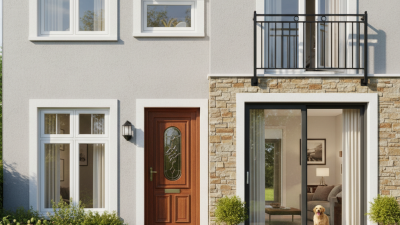
Top 10 Wall Door Manufacturers in China

A wall door can do more than divide rooms. It influences privacy, circulation, daylight, and the feeling of a home or office. Frank Lloyd Wright wrote, “The space within becomes the reality of the building.” That thought applies to wall doors, especially when a sliding panel disappears into a partition. Details matter.

This guide introduces ten wall door manufacturers in China. It considers product range, materials, customization options, and production capability. Buyers should also check installation requirements, hardware compatibility, lead times, and after-sales support. A polished catalog is not enough. The ranking is a practical starting point, not an independent certification or a guarantee of product performance.

Use the comparisons to prepare better questions for suppliers. Ask how door dimensions, finishes, and opening systems can be customized. Request current specifications and clear warranty terms. Where possible, inspect a sample: a smooth finish and quiet track tell you more than a product photo. No list can fit every project, and this one may not capture every local strength. Still, it can help buyers narrow their search and compare manufacturers with care.
Top 10 Wall Door Manufacturers in China

What Defines a Wall Door and Where Is It Used?

What Defines a Wall Door and Where Is It Used?

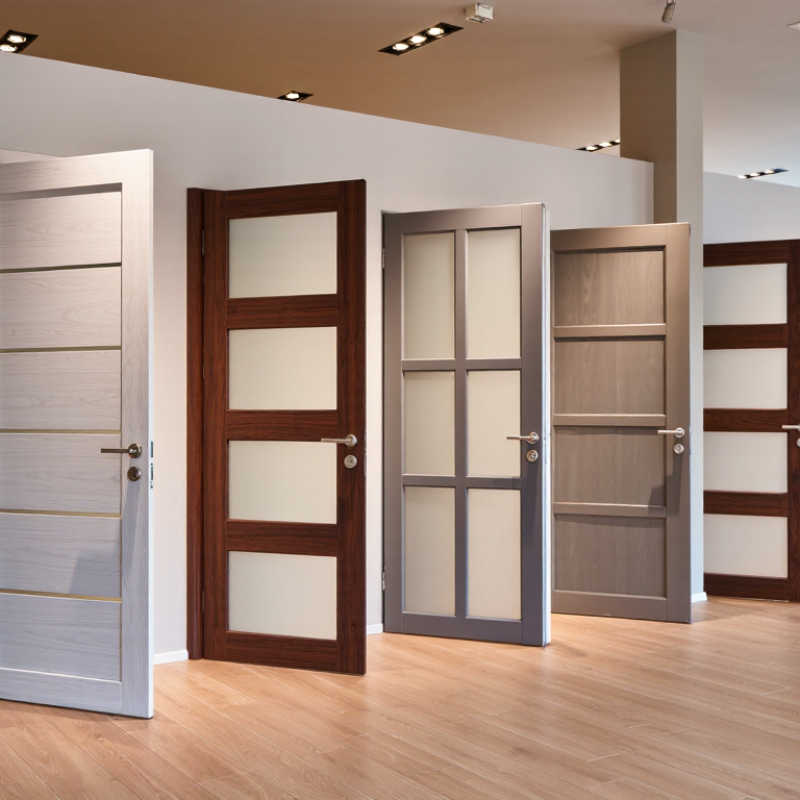
A wall door is a door assembly fitted into or alongside a wall opening. The term is not used consistently, so product details matter more than the label. Most assemblies include a door leaf, frame or track, hinges or rollers, and suitable hardware. A flush door sits nearly level with the wall, while a sliding door moves along a track. Small gaps, uneven walls, and the direction of opening can affect fit and everyday use.

Wall doors are common in bedrooms, bathrooms, offices, wardrobes, and interior partitions. In a narrow hallway, a sliding design can keep the doorway clear of furniture. A hinged door may provide a tighter seal for privacy or noise reduction, though results depend on its construction and installation. For wet areas, check the surface finish and edge protection. I would not assume that every “wall door” offers the same function; the name alone can be misleading.

Tips: Measure the opening at several points, since walls are not always perfectly square. Confirm wall thickness, track clearance, and hardware requirements before ordering. Keep a small sample of the floor and wall finishes nearby when comparing colors; lighting can make a match look different than expected.

How China’s Wall Door Manufacturing Industry Has Evolved

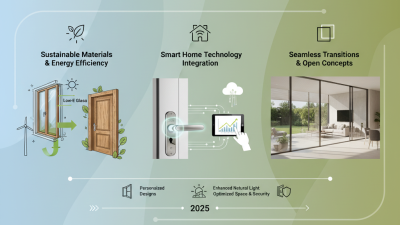
China’s wall door industry has moved from workshop-led production toward more precise, coordinated manufacturing. In earlier operations, fit and finish often depended heavily on individual craftspeople. Today, computer-guided cutting can help keep door panels, frames, and concealed hinges aligned. The change is visible in small details: cleaner edges, consistent gaps, and surfaces that meet flush with the surrounding wall. Precision matters.

Material choices have also broadened. Manufacturers may combine engineered wood cores with decorative veneers or durable coated surfaces, balancing appearance, weight, and stability. Digital design tools make custom dimensions easier to plan, while automated equipment can shorten repeat production runs. Still, customization is not effortless. Unusual wall thicknesses or uneven site measurements can complicate installation, and factory accuracy cannot correct every building problem. That part gets overlooked.

Quality practices have become more systematic, with checks for dimensions, surface defects, and hardware operation before packing. Yet progress is uneven across the industry; machinery alone does not guarantee careful assembly or dependable delivery. Buyers increasingly expect clear specifications, sample approval, and installation guidance. Manufacturers must connect design, production, and on-site fitting more closely. The evolution is real, but consistency remains a work in progress.

Top 10 Wall Door Manufacturers in China - How China’s Wall Door Manufacturing Industry Has Evolved

Sector-wide overview of key manufacturing and market developments. The rows describe industry trends, not a ranking of individual manufacturers; timing and adoption vary across product categories and regions.

No. Development area Earlier common approach Direction of industry evolution Practical significance
1 Production methods Labor-intensive workshops and manual processes were widely used, particularly by smaller producers. Many factories have introduced mechanized cutting, pressing, sanding, and finishing equipment; automation levels differ by factory and product. Mechanization can improve repeatability and output, while requiring investment in equipment and process control.
2 Materials and construction Solid timber and basic panel constructions were common options, with material choice shaped by cost and local supply. The product mix now includes solid wood, engineered wood, composite panels, metal, and glass, depending on the intended use. Different constructions affect weight, appearance, moisture response, durability, and price.
3 Product categories Interior wooden doors and basic entrance doors formed a substantial part of many producers’ ranges. Manufacturers serve a broader mix of interior, entrance, fire-rated, security, bathroom, and other application-specific doors. Performance requirements depend on the application; specifications and test evidence should be checked for each product.
4 Customization Standard sizes and limited finish choices were simpler to produce and stock. Made-to-measure dimensions, coordinated finishes, and project-specific configurations are increasingly available, alongside standard products. Customization supports varied building plans but makes accurate measurement and order coordination more important.
5 Design and surface finishes Design choices often emphasized conventional wood appearance and a narrower selection of colors and textures. Current ranges commonly include varied laminates, veneers, coatings, colors, profiles, and panel designs. Finish options allow closer coordination with interior schemes; abrasion, cleaning, and color consistency remain relevant selection criteria.
6 Digital design and production planning Paper drawings and manual production scheduling played a larger role in many operations. Some producers use digital design files, computer-controlled cutting, and software-supported order or production workflows. Digital workflows can help manage complex orders and reduce data-transfer errors when systems are properly integrated.
7 Environmental management Environmental performance received less consistent attention across suppliers and product lines. Environmental rules and buyer expectations have increased attention to emissions, coatings, material sourcing, and production waste. Compliance depends on the applicable market and product; request current documentation rather than relying on general claims.
8 Quality assurance and testing Inspection often relied heavily on visual checks and production experience. Quality programs may combine incoming-material checks, dimensional inspection, process controls, and product testing. Testing and traceable inspection records help buyers assess whether a door meets its stated use and required specifications.
9 Hardware and smart functions Conventional hinges, handles, and mechanical locks were the standard hardware choices. Product offerings can incorporate upgraded hardware and, in some cases, electronic or smart-lock functions. Compatibility, power requirements, installation, and after-sales support should be confirmed for electronic features.
10 Sales channels and supply chains Sales were strongly connected to local dealers, construction projects, and regional distribution networks. Domestic distribution, online product discovery, project supply, and export channels now coexist in the market. Lead times, packaging, installation arrangements, and destination-market standards matter when comparing suppliers.

Criteria for Assessing Wall Door Manufacturers in China

When assessing wall door manufacturers in China, look beyond showroom finishes. Ask what the door core, frame, and surface are made from, and whether those materials suit your climate and building use. A sample should feel solid, but appearance alone proves little. Samples are not the factory.

Request documented checks for dimensions, surface adhesion, hardware operation, and sound or heat performance where relevant. Compare test conditions, not just headline figures. Ask how often production batches are inspected and how defects are recorded. A clear quality process matters. So does consistency.

Review drawings, lead times, packaging, installation guidance, and replacement-part availability before placing an order. Check whether the supplier can explain customization limits, tolerances, and what happens when an opening differs from the plan. Request recent project references or product records you can verify. Even careful documentation cannot remove every risk; a polished sample may not represent every shipment. That uncertainty deserves a direct conversation, not a rushed promise. Look for specific answers, written commitments, and a named contact for follow-up.

Profiles of 10 Leading Wall Door Manufacturers in China

These ten profiles describe common strengths among China’s wall door manufacturers, rather than verified rankings of named companies. Buyers should confirm factory capabilities, material specifications, and test documents directly. Details matter.

A northern manufacturer may focus on insulated doors for cold regions, with sealed edges and stable core materials. A coastal producer might offer corrosion-resistant finishes for humid sites. A third specializes in fire-rated assemblies; check its certificates and installation requirements. A fourth supports custom dimensions, though unusual sizes can extend lead times.

A fifth profile is a high-volume producer of standard interior doors, suited to repeat projects. A sixth makes acoustic doors for offices and hotels, where seals and frame fit affect performance. A seventh supplies steel doors for demanding commercial settings. An eighth combines glass panels with metal frames; ask about safety glass and hardware compatibility. A ninth emphasizes wood-faced doors and finish consistency, which should be checked under site lighting. A tenth provides project coordination, from drawings to packaging. Useful, but not a substitute for technical review.

Some factories offer several of these capabilities, while others rely on external suppliers for components. Request recent project references, production samples, and a written quality-control process. One caution: attractive showroom samples may not reflect batch consistency. Compare specifications before comparing prices.

China’s Urbanization Rate, 2015–2024

China’s rising urbanization rate provides useful housing-market context for wall and door manufacturers. Figures show the share of the population living in urban areas. Source: National Bureau of Statistics of China.

How the Manufacturers Compare in Products and Capabilities

Comparing wall door manufacturers in China means looking beyond catalog size. One factory may offer flush, sliding, and hinged doors, while another specializes in solid-core or glass-panel designs. Ask what each product includes: frame material, surface finish, hinges, seals, and handle options. A sample corner can reveal more than a polished showroom photo. Check whether stated dimensions and finishes match the sample you approve.

Capabilities differ in useful ways. Some manufacturers support custom sizing and coordinated wall panels; others rely on standard models for steadier production. Ask for current lead-time ranges, packaging details, and inspection steps. For projects needing sound control or fire-rated assemblies, request product-specific test documents and confirm which components were tested together. A rating on a door leaf alone may not describe the complete installed assembly. I may be giving too much weight to specifications; communication during sampling also matters. Slow answers can signal a difficult handoff.

Tips: Send drawings, quantities, finish references, and hardware requirements together. Compare like with like. Keep one approved sample, and record any agreed changes before production starts. Small details matter.