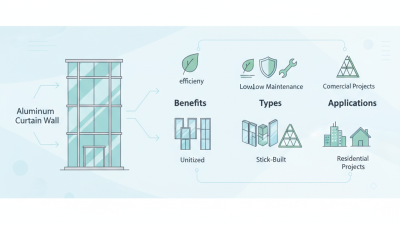
The global curtain wall construction market is shaped by engineering discipline, manufacturing depth, and reliable project delivery. This introduction presents ten leading companies with experience across high-rise towers, airports, hospitals, and complex commercial buildings. Their work can be seen in the details: pressure-equalized joints, precise mullion connections, insulated glazing, and carefully tested anchors.
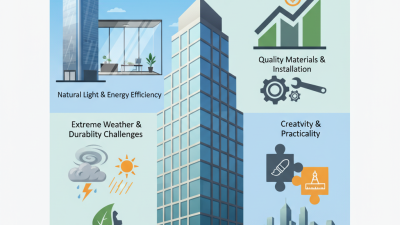
Facade engineer Dr. Matthias Schuler has said, “The facade is the most important environmental filter in a building.” This idea gives the comparison a practical direction. A successful curtain wall must manage daylight, heat, wind, rain, noise, and maintenance. It must also support the architect’s visual goals without weakening safety or long-term performance. Some systems look similar from the street. Their engineering quality may differ greatly behind the glass.
The companies discussed here are considered through technical capability, international experience, testing standards, sustainability efforts, and installation quality. Project scale matters, but it is not everything. Smaller specialists may outperform larger groups on difficult interfaces or demanding restoration work. Rankings are never perfect. Public information can be uneven, and regional standards are not always directly comparable. That limitation deserves attention. Readers should examine verified project records, certifications, warranties, and local performance data before making decisions. In curtain wall construction, a polished facade can hide unresolved problems. Careful evaluation remains essential.
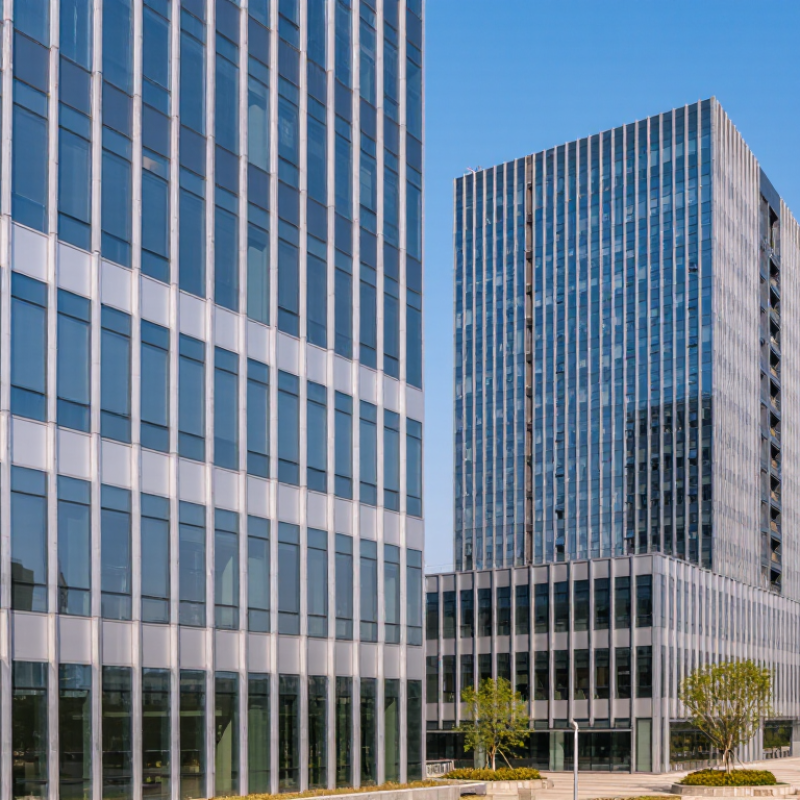
A global ranking of curtain wall construction companies should examine more than project size. Regional experience matters because wind pressure, seismic conditions, humidity, and fire regulations vary widely. Reliable companies show documented work on offices, hospitals, airports, and high-rise buildings. Their technical teams should explain structural calculations, thermal performance, water resistance, and glass selection clearly. Independent testing records and qualified site supervision also strengthen credibility. Experience must be verifiable, not based only on impressive claims.
Tips: Check completed projects in similar climates. Request testing reports, safety records, and maintenance plans. Speak with previous clients. Small details matter.
A strong evaluation also considers design coordination, fabrication accuracy, installation control, and long-term service. Digital modeling can reduce clashes, while factory inspections may reveal sealant or frame defects before delivery. Sustainability deserves careful review, including recycled materials, energy performance, repairability, and responsible sourcing. Yet no ranking is perfectly neutral. Public data differs between regions, and smaller specialists may lack polished marketing. Scores should therefore combine independent evidence, expert interviews, site observations, and client feedback. Delivery history should be measured against agreed schedules, not vague promises. A company that admits past delays and explains corrective action may deserve more trust than one presenting flawless results.
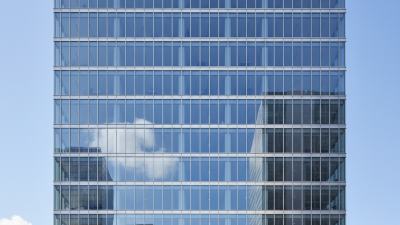
The top 10 curtain wall construction companies worldwide reflect a highly regional industry. Their experience spans unitized systems, stick-built façades, stone interfaces, and complex glazed entrances. Most have delivered towers, airports, hospitals, and cultural buildings under demanding schedules. Their profiles should be assessed through completed projects, safety records, testing results, and long-term maintenance performance.
Geographic distribution strongly shapes their expertise. European companies often focus on strict thermal standards and heritage-sensitive renovations. North American firms commonly manage hurricane zones, seismic design, and large commercial towers. East Asian specialists bring advanced unitized production and dense urban installation experience. Companies serving the Middle East frequently address extreme heat, dust, glare, and rapid construction programs. Regional teams matter. Local engineers understand permits, wind data, labor conditions, and inspection practices better than distant offices.
Reliable evaluation requires more than counting projects. A credible contractor can explain air leakage testing, water penetration results, anchor tolerances, and replacement procedures. Site evidence matters too, such as labeled panels, calibrated lifting equipment, and documented sealant checks. Rankings are never perfectly neutral. A smaller regional firm may outperform a global competitor on one complex site. Some published project data is also incomplete or inconsistent. Buyers should compare technical capacity, financial stability, regional experience, and aftercare support before selecting a partner. The best profile is practical, not merely impressive.
Leading curtain wall construction companies are judged by more than project size. Their real expertise appears in system design, material selection, and site execution. Experienced teams study wind loads, thermal movement, drainage paths, and building geometry before fabrication begins. A small drawing error can create a costly leak.
Aluminum frames remain popular because they are lightweight, durable, and adaptable. Glass selection requires equal care. Insulated, laminated, low-emissivity, and solar-control glass can improve comfort and energy performance. Stone, metal panels, terracotta, and fiber-reinforced materials may add texture or reduce visual weight. Each material needs compatible seals, fasteners, coatings, and movement allowances.
Mock-up testing reveals weaknesses early. Engineers examine air leakage, water penetration, structural pressure, and joint behavior. Site crews then use calibrated tools, clear installation tolerances, and documented inspections. Good companies maintain communication between architects, fabricators, installers, and building managers. That process protects both performance and appearance.
No system is perfect. Field conditions can differ from laboratory results. A rushed sealant joint may look acceptable but fail after seasonal movement. Even experienced teams sometimes underestimate access limitations or repair difficulty. Careful companies review these mistakes openly and improve their details. Their authority comes from tested methods, qualified personnel, and years of practical lessons—not from impressive claims alone.
Top 10 Curtain Wall Construction Companies Worldwide
The leading curtain wall contractors work across airports, hospitals, towers, museums, and university campuses. Their major projects demand more than attractive glass surfaces. They coordinate engineering, fabrication, logistics, installation, and long-term maintenance.
Market sectors shape technical choices. High-rise offices often require unitized systems, thermal breaks, and pressure-equalized joints. Hospitals need airtight interfaces and dependable moisture control. Airports may require oversized panels, complex geometry, and strict fire-performance testing. Experienced contractors usually build full-scale mock-ups before production. These tests reveal water leaks, movement problems, and installation errors early. Digital modeling improves coordination, although it cannot replace careful site inspection. Small tolerances still matter.
Tips: Compare contractors through verified project records, testing procedures, safety performance, and local code knowledge. Ask who controls the interfaces between structure, glass, sealants, and insulation. A polished portfolio is not enough. Request maintenance data, not only photographs.
Strong companies also manage difficult realities. Wind loads change with building height and shape. Coastal projects face salt exposure and corrosion risks. Cold climates demand careful condensation analysis. Some teams appear technically capable but struggle with procurement delays. That weakness is easy to overlook. In my view, the best partner combines engineering depth with disciplined communication. Even then, every project needs independent checks, because design assumptions can fail under real weather, rushed installation, or imperfect workmanship.
| Rank | Anonymous Industry Profile | Major Project Categories | Primary Market Sectors | Curtain Wall Systems | Technical Capabilities | Geographic Delivery | Typical Project Scale |
|---|---|---|---|---|---|---|---|
| 01 | Profile A — Global Façade Specialist | Super-tall office towers, mixed-use skyscrapers, landmark commercial developments | Commercial, hospitality, residential, retail | Unitized curtain wall, high-performance stick systems, insulated glazing | Thermal modelling, wind-load engineering, complex geometry, bespoke mock-up testing | North America, Europe, Middle East, Asia-Pacific | High-rise buildings exceeding 200 m; large multi-façade packages |
| 02 | Profile B — Integrated Building Envelope Contractor | Airports, transport hubs, civic complexes, large urban regeneration projects | Transportation, public infrastructure, commercial, cultural | Unitized and semi-unitized façades, skylights, glazed roofs | Design-assist, BIM coordination, air and water testing, acoustic performance | Europe, Asia, Gulf countries, selected international markets | Large public buildings with complex interfaces and demanding schedules |
| 03 | Profile C — High-Performance Façade Manufacturer | Energy-efficient office campuses, institutional buildings, research facilities | Corporate, education, healthcare, science and technology | Thermally improved curtain wall, triple glazing, ventilated double-skin façades | Low-U-value design, solar-control analysis, condensation assessment, thermal breaks | Western Europe, Scandinavia, North America, selected Asian markets | Medium- to large-scale institutional and commercial developments |
| 04 | Profile D — Complex Geometry Envelope Expert | Performing arts venues, museums, exhibition centres, iconic public buildings | Cultural, leisure, hospitality, public sector | Unitized curved façades, point-supported glazing, cable and tension systems | Parametric design, 3D coordination, curved glass engineering, specialty metalwork | Europe, Middle East, East Asia, Australia | Architecturally distinctive buildings with non-standard geometry |
| 05 | Profile E — High-Volume Commercial Façade Provider | Office districts, residential towers, shopping centres, urban masterplans | Commercial, residential, retail, mixed-use | Standardized unitized façades, stick curtain wall, punched windows | Design standardization, modular production, logistics planning, site installation | China, Southeast Asia, Middle East, Africa, selected European markets | Multiple-building developments and high-volume façade programmes |
| 06 | Profile F — Sustainable Façade Technology Provider | Green-certified towers, net-zero campuses, retrofit and refurbishment schemes | Commercial, government, education, healthcare | Double-skin façades, ventilated façades, solar-shading-integrated systems | Embodied-carbon assessment, daylight simulation, BIPV coordination, retrofit engineering | Europe, North America, Australia, advanced Asian markets | New-build and refurbishment projects targeting high environmental ratings |
| 07 | Profile G — Specialist Glazing and Transparency Contractor | Atriums, transport terminals, winter gardens, retail and hospitality interiors | Transportation, retail, hospitality, leisure | Structural glazing, skylights, glass roofs, large-format insulated glazing | Glass fin design, point-fixed systems, movement joints, specialist access solutions | Europe, Gulf region, Asia-Pacific, North America | Large-span glazed spaces and visually demanding transparency applications |
| 08 | Profile H — Regional-to-International Façade Fabricator | Hotels, hospitals, apartment towers, business parks | Hospitality, healthcare, residential, office | Stick curtain wall, unitized modules, louvers, sunshades | Shop drawing production, fabrication control, performance testing, installation supervision | Middle East, South Asia, Southeast Asia, Africa | Mid- to high-rise developments with repeatable façade modules |
| 09 | Profile I — Façade Engineering and Remediation Specialist | Existing tower upgrades, façade replacement, code-compliance programmes | Commercial, residential, public buildings, heritage assets | Replacement curtain wall, overcladding, secondary glazing, rainscreen interfaces | Condition surveys, forensic investigation, fire-safety upgrades, occupied-building logistics | United Kingdom, Europe, North America, Australasia | Occupied buildings requiring phased construction and performance improvement |
| 10 | Profile J — Modular and Off-Site Façade Systems Provider | Modular housing, student accommodation, hotels, rapid-build developments | Residential, education, hospitality, affordable housing | Prefabricated curtain wall panels, unitized modules, hybrid rainscreen systems | Off-site assembly, repeatable detailing, lean manufacturing, rapid installation | Europe, North America, East Asia, selected Middle Eastern markets | Repeatable buildings where programme certainty and production efficiency are priorities |
Top 10 Curtain Wall Construction Companies Worldwide: Industry Trends, Sustainability, and Future Development
Curtain wall leaders are moving beyond glass appearance and installation speed. Thermal performance now shapes design decisions. The UNEP 2023 Global Status Report states that buildings and construction produced 37% of global energy-related and process emissions in 2022. This figure places façades under serious scrutiny.
High-performing projects increasingly use thermally broken frames, low-emissivity glazing, external shading, and airtight interfaces. These details matter on site. A small gap around a frame can weaken a carefully designed envelope. The International Energy Agency reports that building operations account for about 30% of global final energy use. Therefore, leading contractors are using energy models, digital fabrication, and site testing before handover. However, better operational performance does not automatically mean lower total carbon.
Material choices require deeper review. The World Green Building Council promotes whole-life carbon assessment, including manufacturing, transport, replacement, and end-of-life stages. Recycled aluminum helps, but it is not a complete answer. Oversized glass panels may increase cooling loads and transport emissions. No façade is perfectly sustainable. Some project rankings still reward visual impact more than verified lifecycle results.
Future development will likely focus on adaptable façades, building-integrated sensors, and design-for-disassembly systems. Curtain walls may become easier to repair, rather than simply easier to install. Yet these solutions remain costly and unevenly adopted. Contractors must publish credible environmental data, document installation quality, and measure performance after occupancy. That evidence builds trust. It also exposes uncomfortable gaps between design claims and real building behavior.