2026 Top Aluminium Doors and Windows for Global Buyers

The 2026 market for aluminium doors and windows is shaped by slim sightlines, better thermal performance, and flexible finishes. Buyers also need to look beyond attractive catalogue images. A black frame can appear elegant in a showroom, yet its finish, hardware, and installation details determine how it performs on site. Small details matter.

Architect Ludwig Mies van der Rohe’s famous principle, “Less is more,” offers a useful design lens for today’s aluminium systems. It is not a technical specification, though. Global buyers should compare profile depth, glazing options, thermal breaks, drainage, hardware, and documented test results. They should also ask how products are packed and supported during delivery. A neat sample corner tells only part of the story.

This guide introduces leading options for residential, commercial, and renovation projects in 2026. It considers appearance alongside durability, energy performance, customization, and supplier communication. Regional climates differ, and a system suited to a mild coastal home may not suit a cold, windy site. No shortlist is perfect. Even detailed product data cannot replace careful project review. Use these comparisons to prepare sharper questions, request relevant documentation, and match each system to the building—not just the budget.
2026 Top Aluminium Doors and Windows for Global Buyers

2026 Aluminium Door and Window Types: Sliding, Casement, and Tilt-and-Turn

2026 Top Aluminium Doors and Windows for Global Buyers

2026 Aluminium Door and Window Types: Sliding, Casement, and Tilt-and-Turn

For 2026 projects, aluminium systems offer slim sightlines, strong frames, and dependable service life. The right type depends on climate, room layout, and ventilation needs. Coastal buildings need suitable finishes and careful drainage design. Otherwise, salt and trapped moisture can shorten performance.

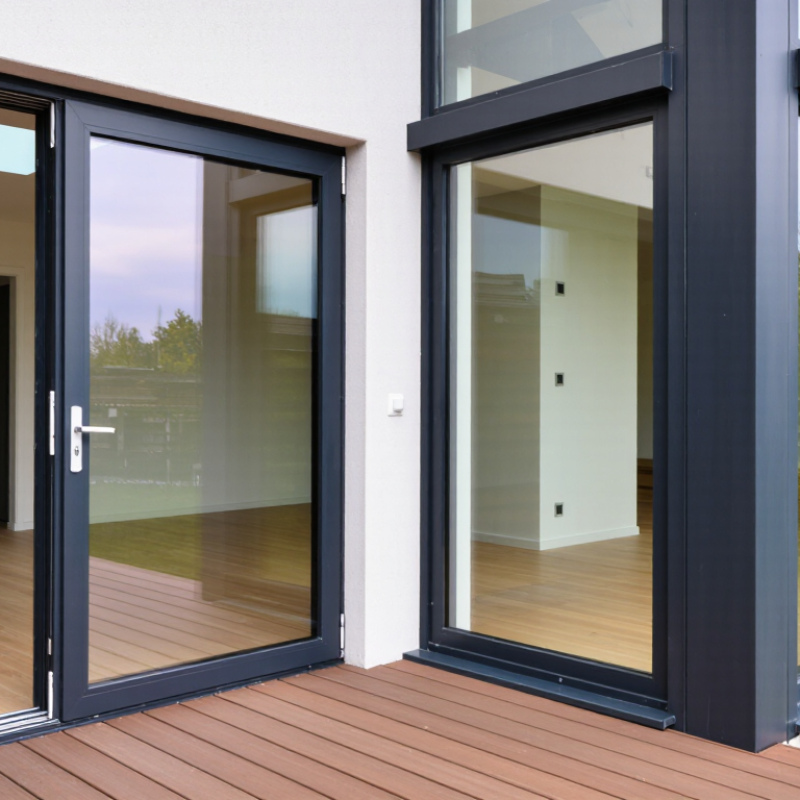
Sliding doors suit balconies, patios, and wide openings. Their panels move horizontally, saving interior space and creating broad glass views. They work well in modern homes, but rollers and tracks need regular cleaning. Poor installation can cause air leakage or difficult operation. Thermal breaks and properly rated seals matter in hot and cold regions.

Casement windows open outward and usually provide strong ventilation. Their compression seals can improve weather resistance when fitted correctly. Tilt-and-turn windows offer two positions: inward tilting for controlled airflow, or full opening for cleaning and ventilation. This flexibility is useful in apartments and upper floors. Still, the hardware requires accurate adjustment.

In my experience, product selection should begin with measured opening sizes and local weather data. Ask for thermal, air, water, and wind test reports. Check the glass specification, frame coating, drainage path, and warranty conditions. Measure twice. A perfect choice does not exist. Even a high-quality window can fail when installers ignore the sill slope or sealing details. Global buyers should also confirm applicable regional standards before placing a large order.


How Thermal Breaks Meet the Cool-Climate Uw Benchmark of ≤0.80 W/(m²·K)

2026 aluminium doors and windows must do more than look slim. In cool climates, buyers increasingly target a Uw value of ≤0.80 W/(m²·K). This benchmark measures the complete window, including glass, frame, spacer, and edge conditions. A high-performing thermal break reduces heat flow through the aluminium frame. It cannot repair weak glazing or careless installation.

The International Energy Agency reports that buildings consume about 30% of global final energy. The 2023 Global Status Report for Buildings and Construction also links the sector to roughly 37% of global energy-related emissions. These figures make thermal performance a commercial issue, not merely a technical detail. EN ISO 10077-1 calculations and verified laboratory testing should support every stated Uw value. On site, however, I often find gaps around corners, sashes, and fixing points. Small gaps matter. The advertised result may not match the installed result.

Tips: Request the full window Uw, not only the centre-glass Ug. Check thermal-break depth, insulated spacers, gasket continuity, and installation details. Triple glazing usually helps, but heavier units require stronger hinges and accurate alignment. Do not assume a deeper polyamide strip guarantees ≤0.80 W/(m²·K). Orientation, wind exposure, and indoor humidity also deserve review. The benchmark is useful, but it is not magic. Sometimes, a slightly less ambitious specification performs better because installers can execute it consistently.

2026 Top Aluminium Doors and Windows for Global Buyers

How Thermal Breaks Meet the Cool-Climate Uw Benchmark of ≤0.80 W/(m²·K)

The chart compares representative whole-window Uw values for common aluminium window configurations. Uw measures heat transfer through the complete window assembly, including the frame and glazing; a lower value indicates better thermal insulation. The cool-climate benchmark is set at ≤0.80 W/(m²·K), typically requiring a thermal-break frame combined with high-performance triple glazing.

How EN 12207 Air-Permeability Classes 1–4 Measure Airtightness

For global buyers comparing aluminium doors and windows in 2026, EN 12207 offers a practical way to judge airtightness.

The standard classifies products from Class 1 to Class 4 after testing under controlled pressure differences.

Class 1 At 100 Pa, Class 1 allows up to 50 m³/(h·m²) of air leakage.
Class 2 Class 2 allows 27
Class 3 Class 3 allows 9
Class 4 Class 4 allows only 3.

Higher classes indicate tighter products. However, the rating applies to the tested window or door assembly, not only its aluminium frame.

EN 1026 testing measures air leakage across pressure stages, while EN 12207 assigns the final class.

A Class 4 product can support better comfort near a windy façade. It may also reduce uncontrolled ventilation losses.

The UNEP Global Status Report for Buildings and Construction 2023 states that buildings consume about 30% of global final energy. Small leakage rates deserve attention.

Buyers should request the test pressure range, sample dimensions, opening type, and installation details.

A laboratory result is not a guarantee for every project. Poor gaskets, uneven walls, or careless threshold sealing can reduce real performance.

This is where specifications often look better than reality.

One overlooked issue remains measurement: comparing m³/(h·m²) with leakage per metre of joint can create a misleading result. Procurement teams should match the declared class with local wind exposure, building height, and ventilation strategy.

How EN 12208 and EN 12210 Rate Water Tightness and Wind Resistance

For 2026 global buyers, aluminium doors and windows should be judged by tested performance, not appearance alone. EN 12208 measures water tightness under controlled laboratory conditions. The test sprays water across the closed product while pressure increases in stages. Class 1A offers basic resistance, while 9A represents the highest standard class.

This rating matters in coastal cities, exposed towers, and homes facing driving rain. A 9A result sounds impressive. However, it does not guarantee a dry room after poor installation. Drainage paths, corner joints, gaskets, and frame alignment can change real performance. Small mistakes matter.

EN 12210 evaluates resistance to wind load and frame deflection. Its classification combines deflection class A, B, or C with pressure class 1 to 5. Class C allows the smallest permitted deflection, while higher pressure classes indicate stronger tested loads. For example, C5 signals limited movement under a high test pressure.

Buyers should request the complete test report, not only a rating printed on a quotation. Check the tested size, opening type, glass weight, pressure value, and installation method. A large sliding door may perform differently from a smaller hinged window using similar materials. Laboratory results are useful, but site conditions remain less predictable. That gap deserves honest attention.

2026 Top Aluminium Doors and Windows for Global Buyers - How EN 12208 and EN 12210 Rate Water Tightness and Wind Resistance

Use the classifications below to compare declared test performance. EN 12208 classifies resistance to water penetration; EN 12210 classifies resistance to wind load. The results are performance classifications, not a universal ranking of aluminium doors or windows.

EN 12208 — Water-Tightness Classification

Test method Class Test pressure (Pa) How to read the classification
Method A — exposed conditions 1A 0 Class 1A is the entry classification in the Method A series.
Method A — exposed conditions 2A 50 Water-tightness tested at the pressure level shown.
Method A — exposed conditions 3A 100 Water-tightness tested at the pressure level shown.
Method A — exposed conditions 4A 150 Water-tightness tested at the pressure level shown.
Method A — exposed conditions 5A 200 Water-tightness tested at the pressure level shown.
Method A — exposed conditions 6A 250 Water-tightness tested at the pressure level shown.
Method A — exposed conditions 7A 300 Water-tightness tested at the pressure level shown.
Method A — exposed conditions 8A 450 Water-tightness tested at the pressure level shown.
Method A — exposed conditions 9A 600 Highest numbered class in the Method A series.
Method A — exposed conditions Exxx Declared pressure above 600 “xxx” is replaced by the pressure achieved, such as E750.
Method B — partially sheltered conditions 1B 0 Class 1B is the entry classification in the Method B series.
Method B — partially sheltered conditions 2B 50 Water-tightness tested at the pressure level shown.
Method B — partially sheltered conditions 3B 100 Water-tightness tested at the pressure level shown.
Method B — partially sheltered conditions 4B 150 Water-tightness tested at the pressure level shown.
Method B — partially sheltered conditions 5B 200 Water-tightness tested at the pressure level shown.
Method B — partially sheltered conditions 6B 250 Water-tightness tested at the pressure level shown.
Method B — partially sheltered conditions 7B 300 Highest numbered class in the Method B series.

EN 12210 — Wind-Load Classification

Classification element Class Reference pressure or limit What it indicates
Wind-load pressure class 0 No pressure value assigned No performance classification is determined.
Wind-load pressure class 1 P1 = 400 Pa Pressure class 1; associated P2 and P3 test levels are 200 Pa and 600 Pa.
Wind-load pressure class 2 P1 = 800 Pa Pressure class 2; associated P2 and P3 test levels are 400 Pa and 1,200 Pa.
Wind-load pressure class 3 P1 = 1,200 Pa Pressure class 3; associated P2 and P3 test levels are 600 Pa and 1,800 Pa.
Wind-load pressure class 4 P1 = 1,600 Pa Pressure class 4; associated P2 and P3 test levels are 800 Pa and 2,400 Pa.
Wind-load pressure class 5 P1 = 2,000 Pa Pressure class 5; associated P2 and P3 test levels are 1,000 Pa and 3,000 Pa.
Relative frontal deflection A Up to 1/150 Deflection class based on the measured relative frontal deflection.
Relative frontal deflection B Up to 1/200 More restrictive deflection limit than class A.
Relative frontal deflection C Up to 1/300 More restrictive deflection limit than class B.

Buyer note: A wind classification combines a pressure class with a deflection class, for example C5. Confirm the exact tested size, opening configuration, glazing, hardware, and installation details in the product’s test documentation. A laboratory classification alone does not establish the performance of every size or installed opening.

How to Check Glazing, Product Certification, and Local Code Compliance

2026 Top Aluminium Doors and Windows for Global Buyers

When buying aluminium doors and windows, glazing deserves more than a quick appearance check. Ask for the glass specification, thickness, coating, spacer type, and safety classification. A clear label should match the quotation, drawings, and delivered product. Small differences matter.

Check whether the glazing has been tested for thermal performance, air leakage, water resistance, wind pressure, and impact where required. Double or triple glazing can improve comfort, but it may also increase frame weight. Confirm that hinges, rollers, locks, and reinforcement can support it. Site experience shows that many failures start with mismatched components. Not the glass alone.

Product certification should come from a recognized testing or certification body. Review the certificate number, test standard, issue date, scope, and exact product configuration. A certificate for one size or glass package may not cover another. This is often overlooked. Ask for installation instructions and maintenance requirements in clear English.

Local code compliance needs written confirmation from a qualified professional in the project area. Check energy limits, safety glazing zones, emergency escape dimensions, accessibility, fire separation, and wind-load requirements. Coastal or storm-prone locations may need additional impact testing. Do not rely only on a supplier’s general statement. Regulations can change, and imported products may need local approval. I have seen projects delayed because the documents looked complete but missed one regional requirement. That mistake is avoidable, though not always obvious.