7 Tips for Buying Cold Rolled Steel Strips?

Buying Cold Rolled Steel Strips requires more than comparing prices on a supplier’s website. The right choice depends on grade, thickness, width, surface finish, tolerances, and intended use. A strip for stamped brackets may need different properties than one for precision springs or electrical components. Small dimensional errors can create feeding problems, uneven forming, or costly production delays.

This guide presents seven practical tips for evaluating suppliers and materials with greater confidence. It considers mill certificates, mechanical properties, edge condition, surface quality, packaging, lead times, and inspection procedures. Ask for clear test reports. Check whether the stated tolerances match your drawings. Request samples when the application is sensitive. A clean, bright surface may look impressive, but appearance alone does not prove consistency. That mistake is easy to make.

Reliable purchasing also requires attention to communication. Confirm coil weight, inner diameter, outer diameter, quantity, and labeling before placing an order. Discuss storage and rust protection, especially when shipments may cross humid regions. An experienced supplier should explain limitations instead of promising everything. Price still matters, but the cheapest quote can become expensive after rejects, rework, and production downtime. I have learned that a detailed specification prevents more trouble than a rushed negotiation. Still, no checklist is perfect. Actual performance can reveal issues that paperwork misses. Careful sampling, traceability, and honest review help turn Cold Rolled Steel Strips into a dependable part of your production process.
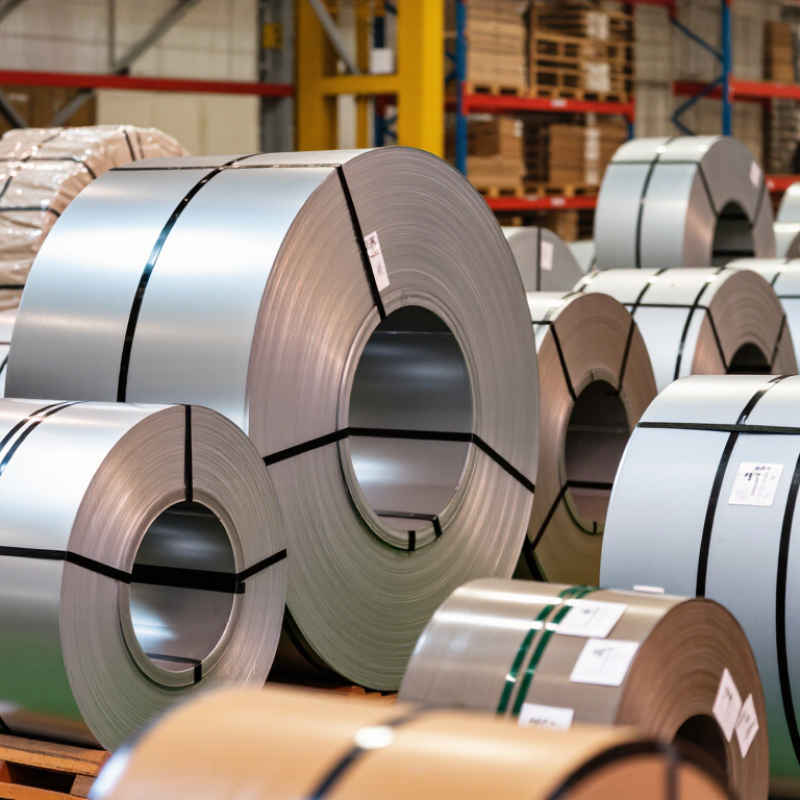
7 Tips for Buying Cold Rolled Steel Strips?

Define the Grade and Performance Requirements

Define the grade before comparing prices. A cold rolled strip may look identical on a sample table, yet perform very differently in a stamping die. Confirm the required yield strength, tensile strength, elongation, hardness, and forming values. For deep drawing, ask for r-value and n-value data, not only a grade name. ASTM A1008/A1008M and EN 10130 define different steel categories and testing expectations. Use the standard required by your drawing or engineering department.

Tip 1: Match the grade to the failure risk. Choose drawing-quality steel when stretching and redraws matter. Use higher-strength grades when springback or load capacity controls the design. A stronger grade is not automatically better. It may crack sooner during tight bending. The World Steel Association’s 2024 Short Range Outlook forecast global steel demand above 1.7 billion tonnes, but large production volumes do not guarantee the right performance for your part.

Tip 2: Request traceable test evidence. Ask for a heat number, certificate, tensile test method, thickness tolerance, and surface description. ISO 6892-1 provides a recognized tensile-testing method. Check whether values apply longitudinally or transversely. That detail is easy to miss. Also define coil width, edge condition, oiling, and flatness. In purchasing reviews, the overlooked requirement is often surface quality, not strength. A bright strip can still fail after forming. Leave room for a trial coil, because real dies sometimes disagree with the specification.

Compare Strip Dimensions, Tolerances, and Surface Conditions

7 Tips for Buying Cold Rolled Steel Strips?

Cold rolled steel strips look simple, but small dimensional differences can stop a stamping line. Start by writing the nominal thickness, width, coil inner diameter, and slit length. Then compare suppliers using the same units and measurement method. Tip one: request thickness readings across the strip width. Tip two: check width tolerance at several coil points. EN 10131 and ASTM A568 provide useful tolerance frameworks, but the selected grade and order condition still matter. Do not accept “standard tolerance” without a written range.

Tip three: define flatness, edge wave, and camber. A strip can meet thickness requirements and still wander through a feeder. Tip four: confirm burr height after slitting. Sharp edges may damage tooling or handling equipment. Tip five: ask for surface classification, not only “bright” or “clean.” Describe scratches, pits, stains, roll marks, and allowable roughness. A sample viewed under warehouse lighting may hide defects. Use angled light and inspect both sides.

Tip six: match surface protection to storage time. Oiled material may resist rust better, yet it can affect cleaning or welding. Tip seven: request a dimensional inspection report with traceable instruments. World Steel Association data reports 1,892 million tonnes of crude steel production in 2023, showing the market’s scale, not product consistency. That distinction matters. In my experience, buyers often compare price before tolerance tables. I have made that mistake too. Rechecking three sample coils is slower, but usually cheaper than correcting a production stoppage.

Evaluate Suppliers, Certifications, and Production Capacity

When buying cold rolled steel strips, evaluate the supplier beyond price and surface finish. A common purchasing mistake is accepting a certificate without checking its scope. Confirm the mill’s legal entity, production location, grade capability, thickness tolerance, width range, and heat-treatment options. Request current ISO 9001 certification, but verify the certificate number and covered site independently. The ISO Survey 2023 recorded more than 1.2 million ISO 9001 certificates worldwide, so certification alone does not prove steelmaking competence.

Ask for material test reports linked to each coil number. Check chemistry, yield strength, tensile strength, elongation, hardness, coating condition, and dimensional tolerance. Match the documentation with recognized specifications, such as ASTM A1008/A1008M or the relevant EN standard. A supplier should also explain sampling frequency and corrective-action procedures. Vague answers deserve caution. Very much so.

Production capacity needs evidence, not confident promises. Request monthly output, current utilization, rolling-mill size, annealing capacity, slitting lines, and recent delivery performance. Compare stated capacity with the supplier’s export records or audited financial information where available. The World Steel Association reported 1.89 billion tonnes of global crude steel production in 2023, showing a vast market but also intense supply-chain variation. Large output does not guarantee consistent strip quality. Ask for a trial coil, inspect edge condition and flatness, and record results before approving full-volume orders. My own preference is simple: test a smaller batch, then challenge the supplier’s weakest tolerance—not only its best sample.

Check Pricing, Minimum Orders, and Delivery Terms

When buying cold rolled steel strips, compare the complete price, not only the price per ton. Ask for an itemized quotation. It should include steel grade, thickness, width, tolerances, slitting fees, packaging, taxes, and freight. A quote for 0.8 mm by 300 mm strips may look attractive until edge trimming and export charges appear. Request prices for several quantities. The lowest unit price may require more stock than your warehouse can safely hold.

Minimum order quantity deserves careful attention. Confirm whether it applies to each width, grade, or total order. Some suppliers accept a two-ton order but require one ton per specification. That detail can leave unused material. Ask whether mixed sizes are possible. Negotiate a trial batch before committing to regular production. Small orders may cost more per kilogram, but they can reduce storage losses and quality risks. Keep this trade-off visible.

Delivery terms must be written clearly. Confirm the production lead time, dispatch location, shipping method, and responsibility for freight insurance. Ask when the delivery clock starts. It may begin after payment, drawing approval, or raw-material confirmation. Check coil weight, wrapping, rust protection, and unloading requirements. Also request a realistic delay allowance. Delivery dates sometimes look precise but are not. I would rather accept a practical date than plan production around an optimistic promise. Review inspection documents before shipment, especially thickness records and surface condition.

Inspect Samples and Confirm Quality Before Purchase

A sample is your first quality checkpoint when buying cold rolled steel strips. Do not judge it from photographs alone. Request strips from the intended production lot, with the same grade, thickness, width, and surface finish. Measure thickness at several points using a calibrated micrometer. Check width, flatness, edge condition, burrs, scratches, and oil marks under bright, angled light. Look closer.

Ask for the mill test certificate and match its heat number with the package label. Confirm chemical composition, yield strength, tensile strength, elongation, hardness, and dimensional tolerances. Testing should follow a recognized method, such as tensile testing under ASTM E8/E8M. ISO’s Survey 2023 reported 1,265,216 ISO 9001 certificates worldwide, yet certification alone cannot prove one shipment is consistent. Paperwork supports inspection; it does not replace it.

Corrosion deserves serious attention. The NACE IMPACT study estimated global corrosion costs at about 2.5 trillion dollars annually, equal to roughly 3.4% of global GDP. Store samples in dry conditions, then inspect exposed edges and surfaces after handling. A clean strip may hide weak packaging or unstable oil protection. I still treat a perfect sample cautiously. Ask for repeat samples, retained specimens, and a written acceptance standard before payment. Small gaps in inspection can become costly production defects.

7 Tips for Buying Cold Rolled Steel Strips: Inspect Samples and Confirm Quality Before Purchase

Compare the typical tensile-strength ranges of common cold-rolled low-carbon steel grades before approving samples. Confirm the selected grade, thickness, surface finish, dimensions, chemical composition, and mechanical properties against the applicable specification and mill test certificate.

Reference basis: typical tensile-strength ranges specified for DC01–DC06 grades in EN 10130. Actual requirements may vary by thickness, product condition, testing method, and purchase specification. Always verify samples with documented inspection or independent testing before purchase.