Buying aluminium sliding doors is a practical decision that can change how a room feels and performs. These doors can bring wider views, stronger daylight, and smoother access to a garden or balcony. However, attractive frames do not always guarantee reliable performance. Measure twice. A few overlooked millimetres can create installation problems later.
This guide explores ten important checks before choosing aluminium sliding doors. It considers frame strength, glass performance, thermal breaks, drainage, locking systems, and roller quality. It also examines how the door will handle daily use, wind, rain, and changing temperatures. In real renovation projects, small details often separate a dependable door from an expensive disappointment. Ask about the frame’s finish, not just its colour. Confirm whether replacement rollers and seals remain available. Coastal properties may need stronger corrosion protection than inland homes.
Energy efficiency deserves careful attention. Look for verified glazing information and realistic performance claims. A thermally broken frame can reduce heat transfer, but it cannot correct poor installation. Check the installer’s experience with large panels, threshold levels, and weather sealing. A beautiful door with a badly aligned track may become noisy, stiff, or unsafe. That is easy to underestimate.
The recommendations ahead are designed to support informed comparisons rather than rushed purchases. Some priorities will depend on the building, budget, and local climate. Even experienced buyers can miss a warranty limitation or maintenance requirement. Reviewing those details early can prevent costly changes and improve long-term comfort. Reliable advice should acknowledge uncertainty, explain trade-offs, and match the product to the home.
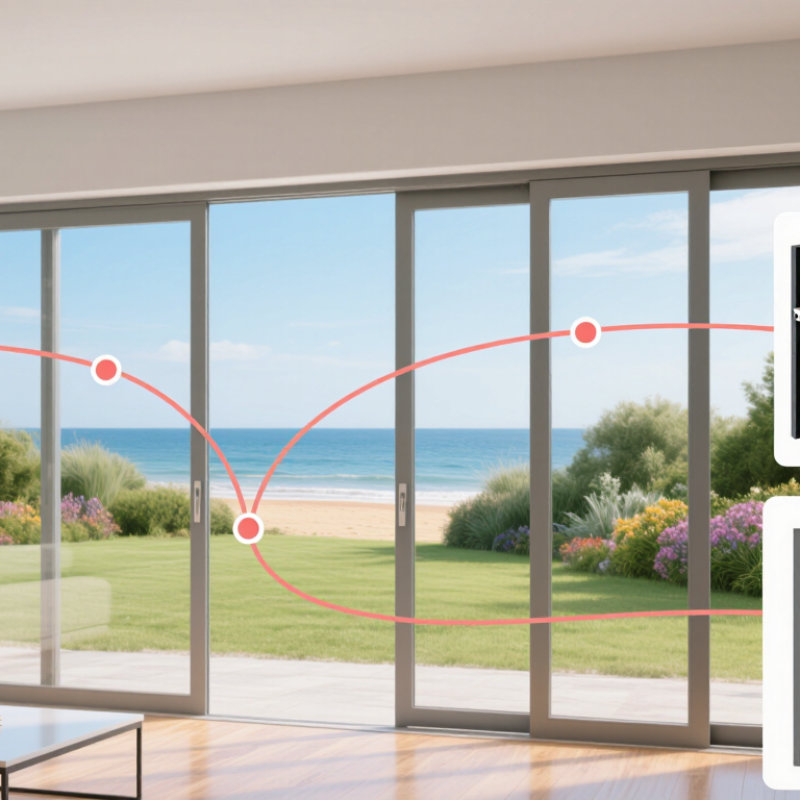
10 Tips for Buying Aluminium Sliding Doors
Define the space before choosing the door. Measure the finished opening, not the plaster or trim. Record width, height, wall thickness, sill level, and nearby furniture. Leave room for handles and panel movement. Tip 1: Measure three times, then check the opening diagonally. Unequal diagonals often reveal a wall that is not square.
Define the door’s purpose. A living-room door may prioritise daylight, ventilation, and smooth daily movement. A balcony door may require stronger weather sealing and safer threshold detailing. The U.S. Department of Energy reports that windows can cause 25–30% of residential heating and cooling energy use. Therefore, request tested U-values, solar heat gain coefficients, air leakage, and water resistance. Tip 2: Match glass performance to your climate, not just appearance. A beautiful low-e glass choice can still feel uncomfortable beside an unshaded, west-facing opening.
Define the opening requirements before ordering aluminium frames. Confirm whether the wall is load-bearing, whether a lintel is present, and where drainage can discharge. Check the number of panels, stacking direction, track depth, sill height, and access width. The International Energy Agency states that buildings account for approximately 30% of global energy demand. Small detailing decisions matter. Tip 3: Ask for installation drawings and independent performance evidence. Do not rely only on catalogue claims. I would also question my first layout; the widest opening is not always the most practical one. Clearance, cleaning access, and a wet threshold can change the decision.
Aluminium grade affects strength, finish, and long-term stability. For sliding doors, 6063-T5 is common because it extrudes cleanly and supports attractive profiles. 6063-T6 offers higher strength, but the temper alone cannot fix poor engineering. Check the supplier’s test certificates and conformity with ASTM B221 or an equivalent standard.
Tip 1: Compare alloy and temper, not just “premium aluminium.”
Tip 2: Ask for wall-thickness details.
Tip 3: Inspect drainage paths and corner joints.
Frame design changes daily comfort. Slim frames bring more glass and daylight, while thermally broken frames reduce heat transfer through the metal. The IEA’s 2024 buildings analysis estimates that buildings use about 30% of global final energy, so thermal performance deserves attention. Request tested U-values, air leakage, and water resistance, rather than relying on attractive drawings.
Tip 4: Compare the complete door assembly.
Tip 5: Check track height and drainage.
Tip 6: Test the rollers under the specified panel weight.
Tip 7: Confirm the locking layout.
A beautiful door can still feel awkward.
Finish options include anodising and powder coating. Anodising keeps a metallic appearance and can resist wear, while powder coating offers broader colour choices. The International Aluminium Institute reports that recycled aluminium requires roughly 5% of the energy used for primary production. Ask about recycled content, coating thickness, and colour consistency between batches.
Tip 8: Request a physical sample.
Tip 9: Check warranty exclusions.
Tip 10: View a finished installation before ordering.
I would not trust a colour chart alone; screens distort neutral tones, sometimes badly.
10 Tips for Buying Aluminium Sliding Doors
Tip 1: Check the U-factor. Lower values usually indicate better insulation. The U.S. Department of Energy reports that windows can cause 25–30% of residential heating and cooling energy use. Tip 2: Compare the solar heat gain coefficient, or SHGC. A lower SHGC may suit hot climates, while higher solar gain can help colder rooms. Tip 3: Request independent NFRC-rated performance data, not vague claims. Tip 4: Choose double glazing for moderate conditions, but consider triple glazing in severe climates. Tip 5: Look for low-emissivity coatings. They reduce heat transfer while preserving daylight.
Tip 6: Select tempered glass for impact safety. Laminated glass can also reduce noise and hold together after breakage. Tip 7: Inspect the aluminium frame’s thermal break. Without it, the interior frame may feel cold and collect condensation. Tip 8: Examine weather seals closely. They should compress evenly along the meeting rails. Small gaps matter. Tip 9: Ask for an air-leakage rating tested under a recognized standard. Weather protection also depends on the sill, not only the glass.
Tip 10: Check drainage paths before installation. Water should exit without pooling inside the track. A practical site lesson is simple: excellent glass cannot rescue poor fitting. I would also test the door after installation, when the frame is level and rollers move smoothly. This detail is easy to overlook. The U.S. Department of Energy and fenestration testing guidance both emphasize whole-unit performance, yet real weather exposure can still reveal weaknesses.
| No. | Buying Tip | What to Evaluate | Useful Benchmark or Data | Why It Matters | Questions to Ask |
|---|---|---|---|---|---|
| 1 | Choose the right glass configuration | Compare single, double, and triple glazing, including the number of panes, cavity width, and gas fill. | Typical centre-of-glass U-values: single glazing about 5.7 W/m²K, double low-emissivity glazing about 1.0–1.6 W/m²K, and triple glazing about 0.5–0.8 W/m²K. | Lower U-values generally mean less heat transfer through the glass, although the complete door U-value also includes the frame and spacer. | What is the certified whole-door U-value, not just the glass U-value? |
| 2 | Select glass for safety and security | Check whether the glass is toughened, laminated, or a combination of both, especially for large panels and low-level glazing. | Toughened glass breaks into small granules; laminated glass is held together by an interlayer after breakage. Safety-glazing requirements vary by local building regulations. | The correct safety glass can reduce injury risk and help retain a broken pane in its frame. | Which panes require safety glazing under the applicable local code? |
| 3 | Consider solar-control performance | Review the solar factor, also called g-value or solar heat-gain coefficient, and visible light transmittance. | A g-value around 0.35–0.50 can reduce solar heat gain compared with clear double glazing, which is often around 0.60–0.70, depending on the specification. | Lower solar gain may improve summer comfort, but excessive reduction can reduce daylight and useful winter heat. | Is solar-control glass needed for the door’s orientation and local climate? |
| 4 | Insist on a thermally broken aluminium frame | Look for a continuous low-conductivity polyamide or equivalent thermal barrier between the interior and exterior aluminium sections. | Compare the declared whole-door U-value in W/m²K. Lower values indicate better thermal insulation; performance depends on door size, glass, frame, and configuration. | A thermal break helps reduce conductive heat loss and the risk of interior condensation on the frame. | Is the quoted U-value independently tested for the exact door size and glass combination? |
| 5 | Check air permeability | Review the tested air-leakage classification for the complete sliding-door assembly, including seals and meeting stiles. | Under EN 12207, air-permeability classes range from 0 to 4, with Class 4 representing the highest classification. | Better air tightness can reduce drafts, uncontrolled heat loss, and the entry of dust or outdoor pollutants. | What air-permeability class was achieved by the complete tested product? |
| 6 | Verify water-tightness | Examine the sill design, drainage channels, weather seals, end dams, and test pressure for the selected door size. | EN 12208 classifies water tightness from 1A to 9A for many products; higher classifications generally indicate resistance to greater test pressures. | Effective drainage and sealing help prevent rainwater entering the room or damaging adjacent finishes. | Does the sill drain to the exterior, and what water-tightness class applies to this configuration? |
| 7 | Match wind resistance to the site | Consider building height, exposure, coastal conditions, local wind speeds, panel size, and the number of sliding leaves. | EN 12210 provides wind-load classifications from 1 to 5 and a pressure class; the required rating must be determined for the project location. | Adequate structural performance helps limit deflection, seal failure, operating problems, and glass stress during strong winds. | Has the exact panel size been assessed for the site’s design wind load? |
| 8 | Inspect the threshold and drainage detail | Compare flush, low, and weathered thresholds, then confirm falls, channels, weep holes, and compatibility with the surrounding floor. | Flush thresholds improve accessibility but may require particularly careful external drainage and weather detailing. | The threshold is a common point for water ingress, trip hazards, dirt accumulation, and installation errors. | What minimum drainage provision and finished-floor tolerance are required? |
| 9 | Evaluate rollers, tracks, and hardware | Check the maximum panel weight, roller material, adjustment range, track protection, locking points, and replacement availability. | Smooth operation depends on correct load capacity, accurate installation, clean tracks, and periodic adjustment; panel weight must remain within the tested limit. | Reliable hardware improves usability, security, alignment, and long-term serviceability. | What is the maximum tested sash weight, and can rollers and locks be replaced separately? |
| 10 | Confirm installation and maintenance requirements | Request installation details, tolerances, warranties, cleaning instructions, seal replacement guidance, and a schedule for track and drainage maintenance. | Routine care commonly includes keeping tracks and drainage paths clear, checking seals, and cleaning aluminium with mild soapy water rather than abrasive or strongly alkaline products. | Correct installation and basic maintenance are essential for preserving weather performance and smooth operation. | Which installation standard, warranty terms, and maintenance procedures apply to the complete door? |
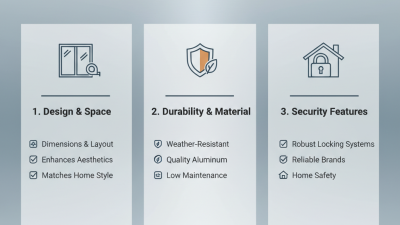
Buying an aluminium sliding door is not only about frame colour or glass size. Hardware quality often decides whether the door feels reliable after years of use. Open and close the sample several times. It should move quietly, without scraping, catching, or needing force. Check the rollers, track, handles, hinges, and locking points for solid construction. Corrosion-resistant parts matter, especially near the coast or in humid rooms. A small gap in the track can collect grit and affect movement.
Security deserves close attention. Look for a lock that engages firmly at several points, not just one latch. Test the handle for movement and inspect how the lock meets the frame. Ask about safety glass, such as tempered or laminated options, and confirm that the specification suits local building requirements. Strong glass cannot compensate for a weak frame or poor installation. Ask for written performance details and independent testing where available.
Weather seals should sit evenly around the panel, with no crushed or missing sections. Watch for air, water, and light gaps around the closed door. A professional installer should check the opening, drainage, frame alignment, and final lock operation. I once focused too much on appearance and ignored a stiff roller. That mistake taught me to test the door repeatedly, not just once in a showroom. Smooth operation today may change if maintenance access is difficult, so ask how rollers and tracks can be cleaned or adjusted.
Buying aluminium sliding doors is not only a frame decision.
Installation quality can decide whether the door remains smooth after winter. Ask for written tolerances, drainage details, shimming methods, and anchoring points. ASTM E2112, referenced in fenestration practice, provides guidance for installing exterior windows and doors. A qualified installer should also explain water-management layers, not merely apply surface sealant.
Check the performance label before comparing prices.
The National Fenestration Rating Council measures U-factor and solar heat gain coefficient, which help assess insulation and summer heat exposure. The U.S. Department of Energy estimates that windows can cause 25–30% of residential heating and cooling energy use. That figure is not a promise for every home, but it shows why glass and installation deserve equal attention. Lower numbers are not automatically better in every climate.
Maintenance is simple, but not optional.
Vacuum the lower track, wipe drainage holes, and inspect seals twice a year. Salt air may require more frequent cleaning. Ask about replacement rollers and gasket availability before buying.
Include delivery, removal, flashing, interior repairs, insect screens, and future hardware in the total cost. The cheapest quotation often excludes these details. I would also leave a contingency budget; renovation walls rarely behave perfectly.
A ten-minute inspection after heavy rain can reveal problems earlier than a warranty discussion.